
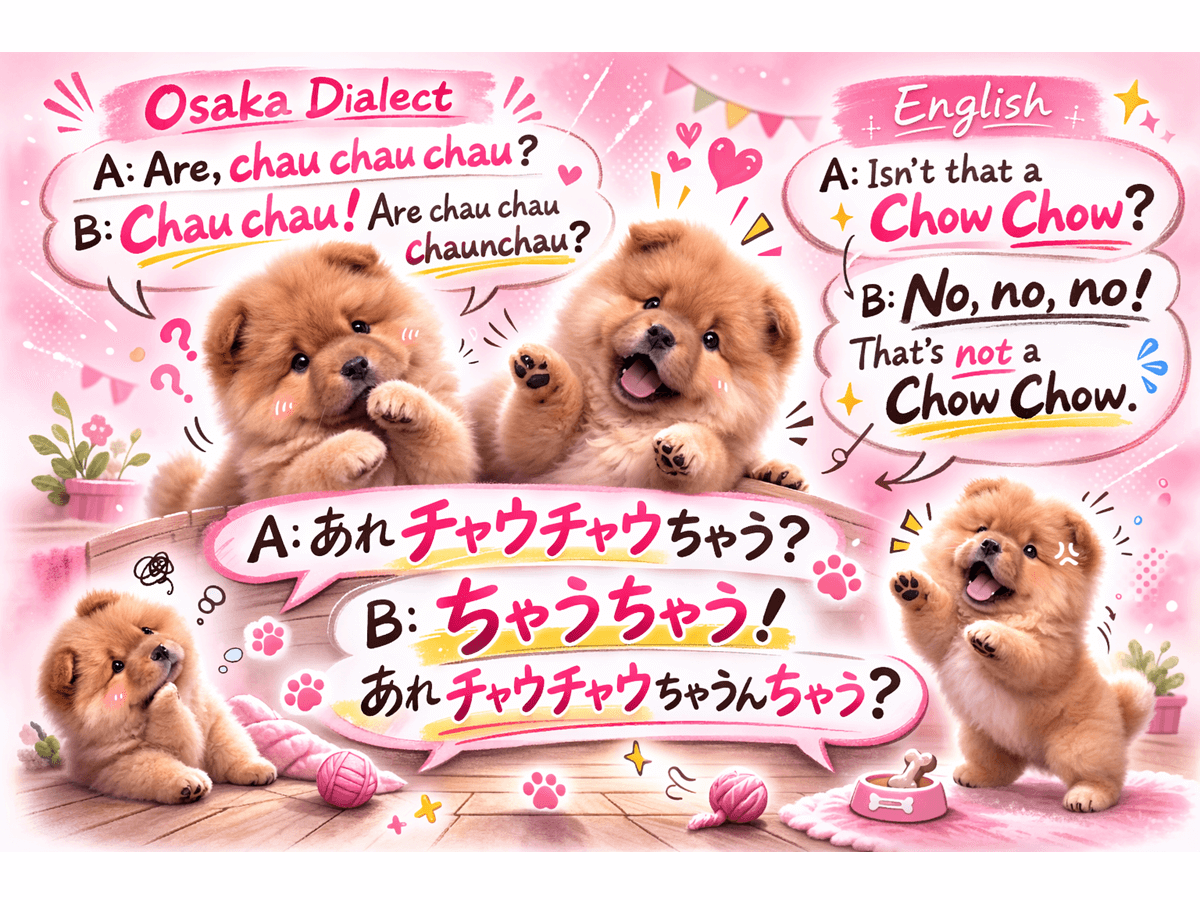
Have you ever heard someone from Osaka say “chau chau”? “Chau chau”??? It’s not a word you’ll find in Japanese textbooks. Translated into standard Japanese, “chau” corresponds to “chigau,” meaning “it’s wrong” in English. “Chau chau” repeats “chau” twice and is used when your conversation partner has said something incorrect, gently denying their opinion.
For example, if someone says, “The meeting tomorrow is at 1 o’clock?” you might respond, “Chau chau, it’s at 2 o’clock!” Saying “Chigau, chigau.” (It’s wrong! It’s wrong!) might make the atmosphere tense, but “chau chau” allows for a smoother conversation without creating negative feelings.
Now, when you add “nen (ねん)” to “chau (ちゃう)” to form “chaunen (ちゃうねん),” it takes on a conclusive nuance similar to “da (だ)” or “noda (のだ).” Do you understand its significance? “Chigau (ちがう)” + “noda (のだ)” becomes “chigaunoda (ちがうのだ),” which essentially means “it’s not true.” While the direct English translation might be “It’s wrong,” in the Osaka dialect, “chaunen (ちゃうねん)” is often used with softer nuances such as “That’s not what I mean…” or “That’s not the case…”
Earlier, we mentioned that when “chau? (ちゃう?)” is added to the end of a noun, it forms a question similar to the standard Japanese “janai? (じゃない?),” which is used for confirmation.
<Example 1>
When you mistakenly think what you’re drinking is tea, but it turns out to be beer.
English:
This is beer, isn’t it?
Standard Japanese:
Kore, biirujyanai? (これ、ビールじゃない?)
Osaka Dialect:
Kore, biiruchau? (これ、ビールちゃう?)

<Example 2>
When you see someone who looks just like Mr. Tanaka.
English:
That is Mr. Tanaka, isn’t it?
Standard Japanese:
Are, Tanaka-san janai? (あれ、田中さんじゃない?)
Osaka Dialect:
Are, Tanaka-san chau? (あれ、田中さんちゃう?)
Now, do you know the Chow Chow dog? With its unique frowning face, abundant fur, and sturdy build, it looks like a charming lion or a bear-like plush toy. In Japanese, we pronounce it “Chau Chau.” Now, let’s try an applied question. What would you say when you see a dog that looks exactly like a Chow Chow? Let’s look at Example 3.

<Example 3>
English:
That’s a Chow Chow, isn’t it?
Standard Japanese:
Are, chau chau jyanai? (あれ、チャウチャウじゃない?)
Osaka Dialect:
“Are, chau chau chau? (あれ、チャウチャウちゃう?)”
Then, here’s an extended question. What about this conversation?
English:
A: Isn’t that a Chow Chow?
B: No, no, no! That’s not a Chow Chow.
Standard Japanese:
A: Are, chauchau janai? (あれ、チャウチャウじゃない?)
B: Chigau, chigau! Are chau chau janainnjanai? (ちがう、ちがう!あれ、チャウチャウじゃないんじゃない?)
Osaka Dialect:
A: Are, chau chau chau? (あれ、チャウチャウちゃう?)
B: Chau chau! Are chau chau chaunchau? (ちゃうちゃう!あれ、チャウチャウちゃうんちゃう?)
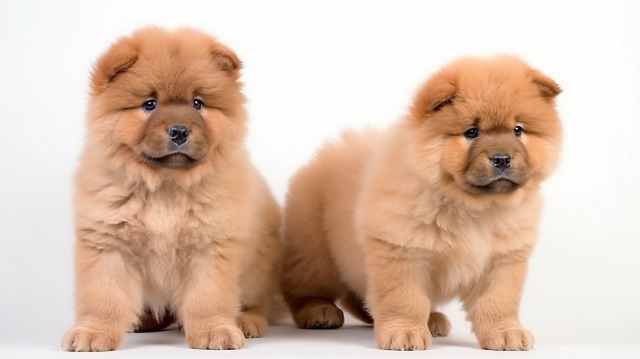
Oh no, what if you see a dog that looks like a Chow Chow in Osaka? Worried? Don’t be! Chow Chows are a Chinese breed, and I’ve never actually used this sentence in real life in Japan. We’re just playing with words here.
Now, as a special bonus, let’s showcase how skillfully someone from Osaka might say these lines.
Lastly, Osaka’s charm lies not only in its distinctive dialect but also in the joy of playfully engaging with it. Come experience the lively atmosphere, friendly locals, and the vibrant blend of tradition and modernity. A visit to Osaka promises not just a cultural journey, but also a delightful linguistic adventure. We warmly invite you to explore the heart of Japan’s Kansai region and immerse yourself in the unique spirit of Osaka!

I live in Osaka and volunteer as a Japanese teacher. After I retire, I’d love to live in Malta in the Mediterranean or on Yakushima Island in Japan someday.
 HTJ has a YouTube page! Check it out