
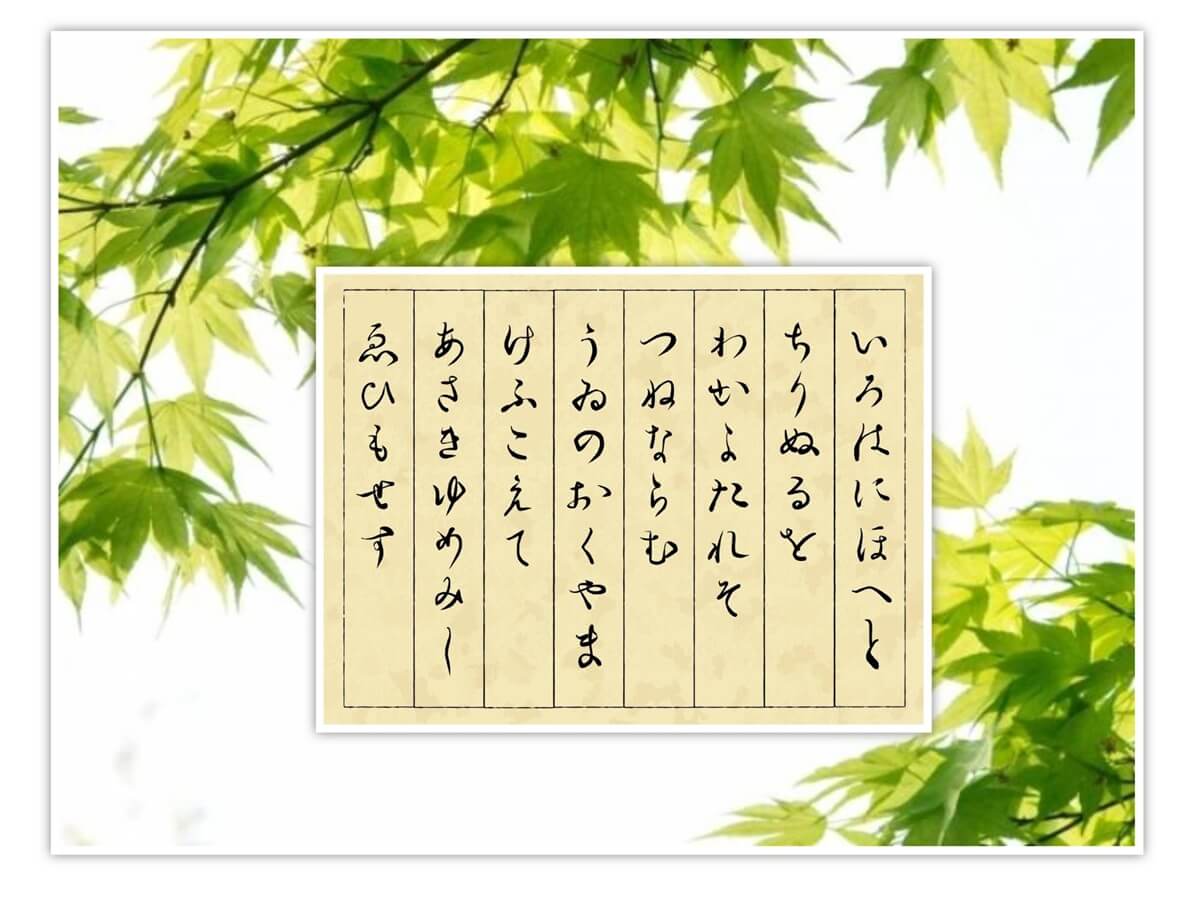
If you are learning Japanese, you are probably familiar with the hiragana order that begins with “a i u e o.” However, have you ever heard of another order that starts with “i ro ha ni ho he to?” In fact, until the Meiji period (the mid-19th century), the “i ro ha” order was commonly used as a learning tool for hiragana, long before “a i u e o” became the standard.
What may seem like a random sequence of characters is actually a poem with a profound meaning. Let’s take a closer look.
■いろはうた
いろはにほへと ちりぬるを
わかよたれそ つねならむ
うゐのおくやま けふこえて
あさきゆめみし ゑひもせす
This is the complete text of the poem. It is said to have been created during the Heian period (794-1185), and its author is unknown. It was composed using each of the 47 hiragana characters exactly once, without any repetition. The characters “ゐ” and “ゑ” are no longer part of standard modern Japanese, but they were pronounced “wi” and “we” respectively. Please try reading the poem aloud. You will notice that it follows a 7–5 syllabic rhythm, giving it a smooth and musical flow.
Now, let us turn to its meaning. When written with kanji, the meaning becomes easier to understand. In modern readings, voiced consonants (濁点 dakuten) are used in several places.
① 色は匂へど 散りぬるを
② 我が世誰ぞ 常ならむ
③ 有為の奥山 今日超えて
④ 浅き夢見じ 酔ひもせず
① Even beautiful flowers will eventually fade away.
② Who can live forever in this world?
③ Today, we go beyond this ever-changing world.
④ We neither chase fleeting dreams nor lose ourselves in intoxication.
■Buddhist Meaning
The Iroha-uta poem contains several Buddhist teachings, one of which is impermanence (諸行無常 shogyō mujō). This principle teaches that all things in this world are constantly changing and nothing lasts forever. While recognizing the fragility of life, it encourages us not to be trapped by worldly desires. Instead, we should live each day with care and awareness.
In the poem, a life that is constantly changing and filled with suffering is likened to “the deep mountains of conditioned existence ( ③ 有為の奥山 ui no okuyama).”
Going beyond these mountains represents the state of enlightenment (悟りsatori), which is expressed in line ④.
The “world of enlightenment” is a state of mind in which one awakens from delusion and intoxication. In this state, one becomes deeply aware of the mystery and preciousness of being alive and truly appreciates the wonder of life itself.
It is an amazing poem because the Iroha–uta is not merely a play on words, but contains profound meaning rooted in Buddhist philosophy.
Very few Japanese people today can recite the Iroha–uta from beginning to end. This is because we don’t learn it at school, and the “a i u e o” order has long replaced the “i ro ha” order in daily life. Yet, despite this, the Iroha–uta has never truly disappeared. In fact, most Japanese people know at least the first line, “iroha ni hoheto.”
■The Usage of “Iroha” Today
Today, the term “iroha” is used metaphorically to mean fundamentals, basics, or the very starting point. For example, “iroha” refers to the ABCs of learning English or the fundamentals of business etiquette.
■Iroha Momiji(いろはもみじ)
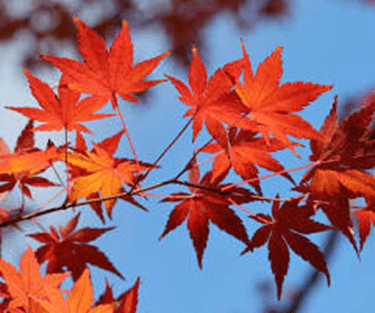
Iroha Momiji is a tree representative of Japanese autumn foliage. Each leaf is divided into seven lobes, and the name originates from counting each leaf as “i ro ha ni ho he to.”
■Iroha Zaka (いろは坂)Iroha Slope
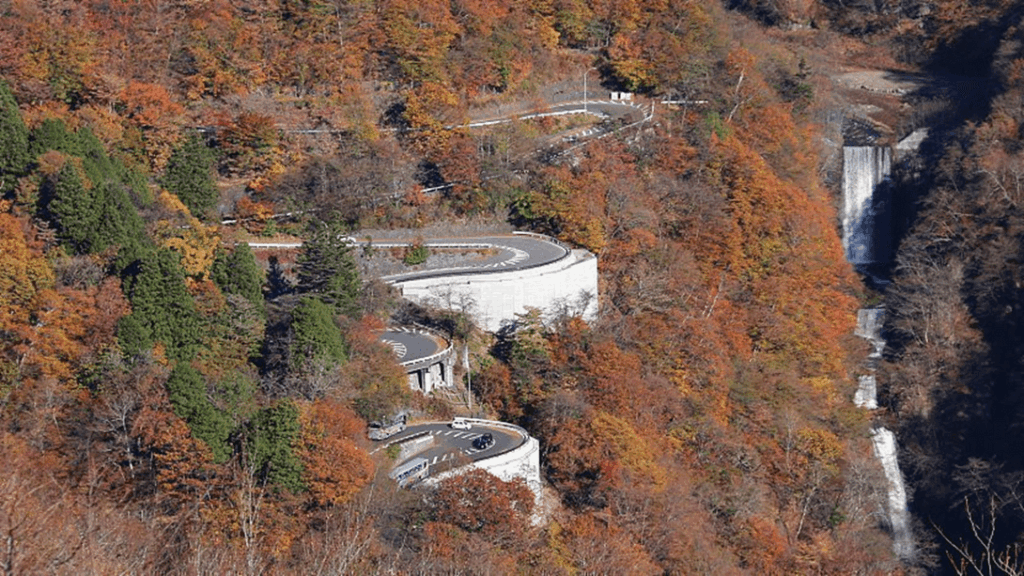
There is a famous mountain road called Iroha-zaka in Nikkō, Tochigi Prefecture.
It is also known as a spectacular driving route and a popular spot for autumn foliage. The road was named Iroha-zaka because it has 48 sharp curves. Each curve is marked with a sign displaying a hiragana character, beginning with the Iroha order. (The final “ん” is included, bringing the total to 48 characters.)
■Iroha Karuta(いろはカルタ)
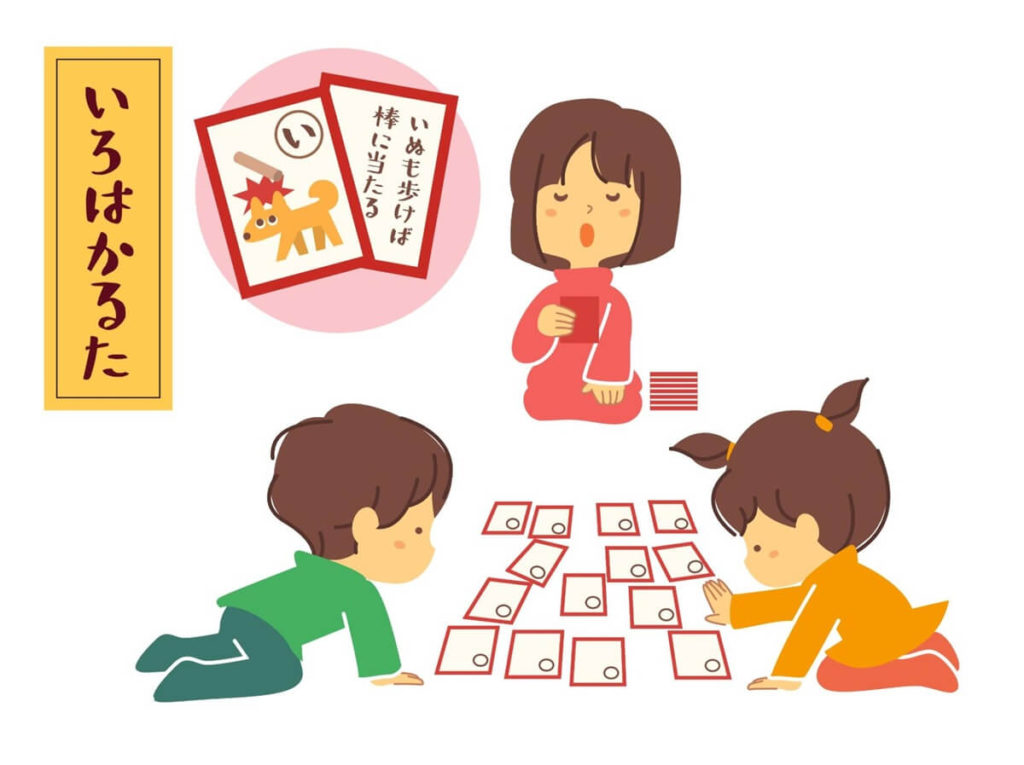
Karuta is a traditional Japanese card game in which players listen to a reader and race to find and take the picture card that matches the reading.
Iroha Karuta consists of two sets of 48 cards: reading cards and picture cards. The reading cards display proverbs, each of which begins with a different letter of the Iroha syllabary.
Over time, some proverbs have been updated or replaced, and different regional versions have emerged, such as Edo, Osaka, and Kyoto editions.
Today, Iroha Karuta is enjoyed mainly by children, often as a form of entertainment during the New Year holidays.
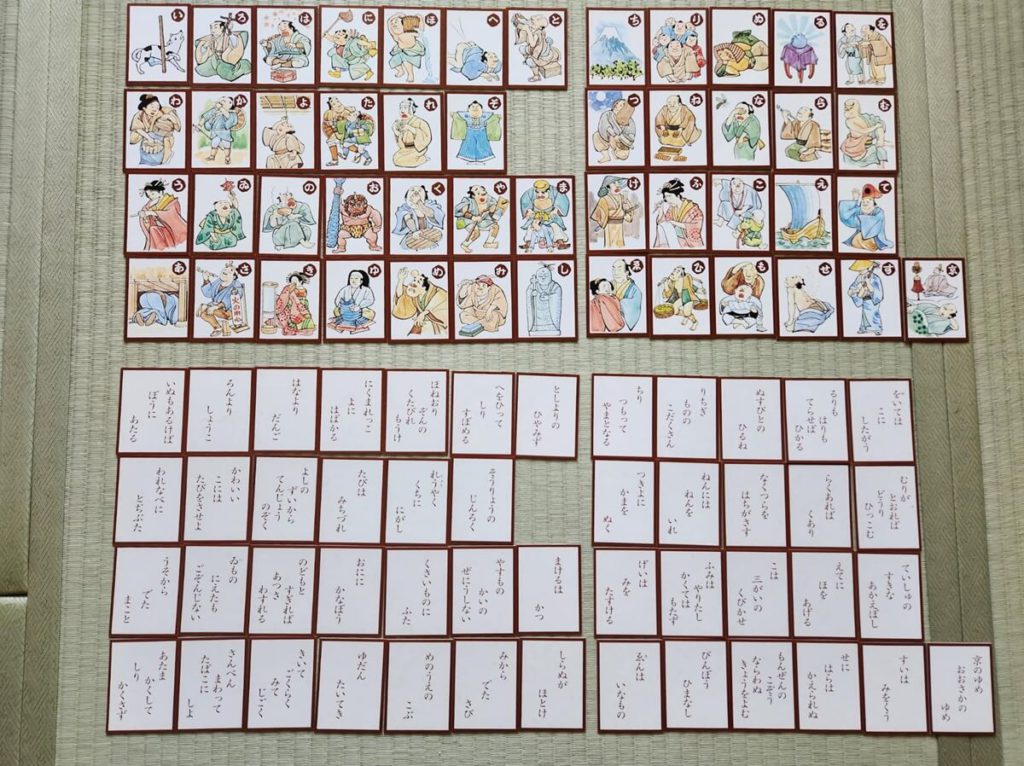
Edo-style Iroha Karuta
Proverbs in a foreign language can be difficult to understand, but Iroha Karuta can help you visualize the situation and guess their meaning. Let’s take a look at the first three cards from the Edo-style Iroha Karuta.
【い】犬も歩けば棒に当たる “Inu mo arukeba bō ni ataru.”
It literally means “Even a dog will bump into a stick if it walks around.”
The proverb can be understood in two ways. It may warn that acting without care can lead to unexpected trouble, but it can also suggest that taking action may bring unexpected opportunities. In short, nothing ventured, nothing gained.
【ろ】論より証拠 “Ron yori shōko.”
It literally means “Evidence is more convincing than arguments or explanations.”
It teaches that instead of talking at length, showing clear proof is the most effective way to persuade others. In other words, actions and facts speak louder than words.
【は】花より団子 “Hana yori dango.”
If you want to know the meaning of “Hana yori dango,” please check my previous article, “Japanese Proverbs and Expressions.”
■Musical Scale
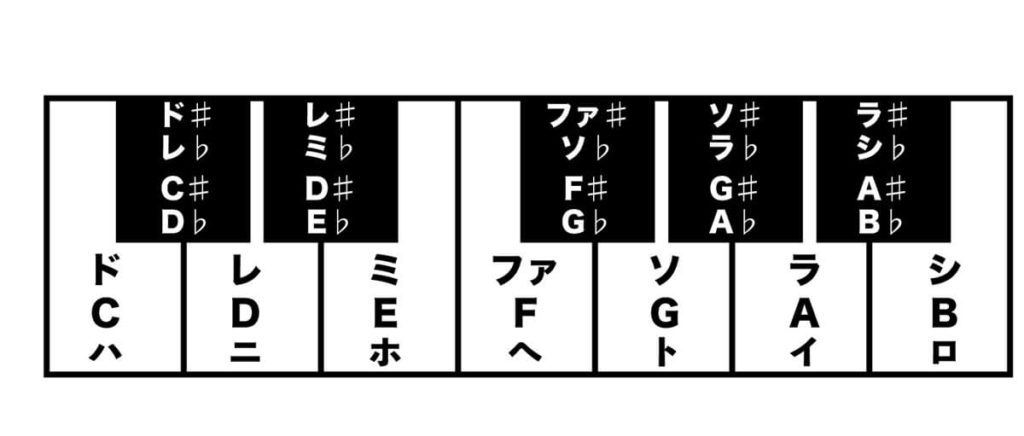
Finally, it is worth noting that the influence of the Iroha-uta extends even into music. The familiar scale do–re–mi–fa–so–la–ti–do originates from Italy, while in English-speaking countries the notes are labeled C, D, E, F, G, A, B, C.
In Japanese, however, the traditional names for musical notes are ha, ni, ho, he, to, i, ro, ha, which are derived directly from the iroha order. For example, C major is called “ハ長調 Ha-chō” in Japanese.
■Conclusion
Traditional Japanese poetry has several forms, each with its own unique rhythm when recited. Today, the Iroha-uta is introduced using the rhythms of several familiar children’s songs. Younger musicians also perform it with original rhythm patterns. Hopefully, the Iroha-uta will remain rooted in Japanese culture for many years to come, never fading away.

Lives in Takatsuki city, Osaka. Has been engaged in English for work and fun for years.


 HTJ has a YouTube page! Check it out