
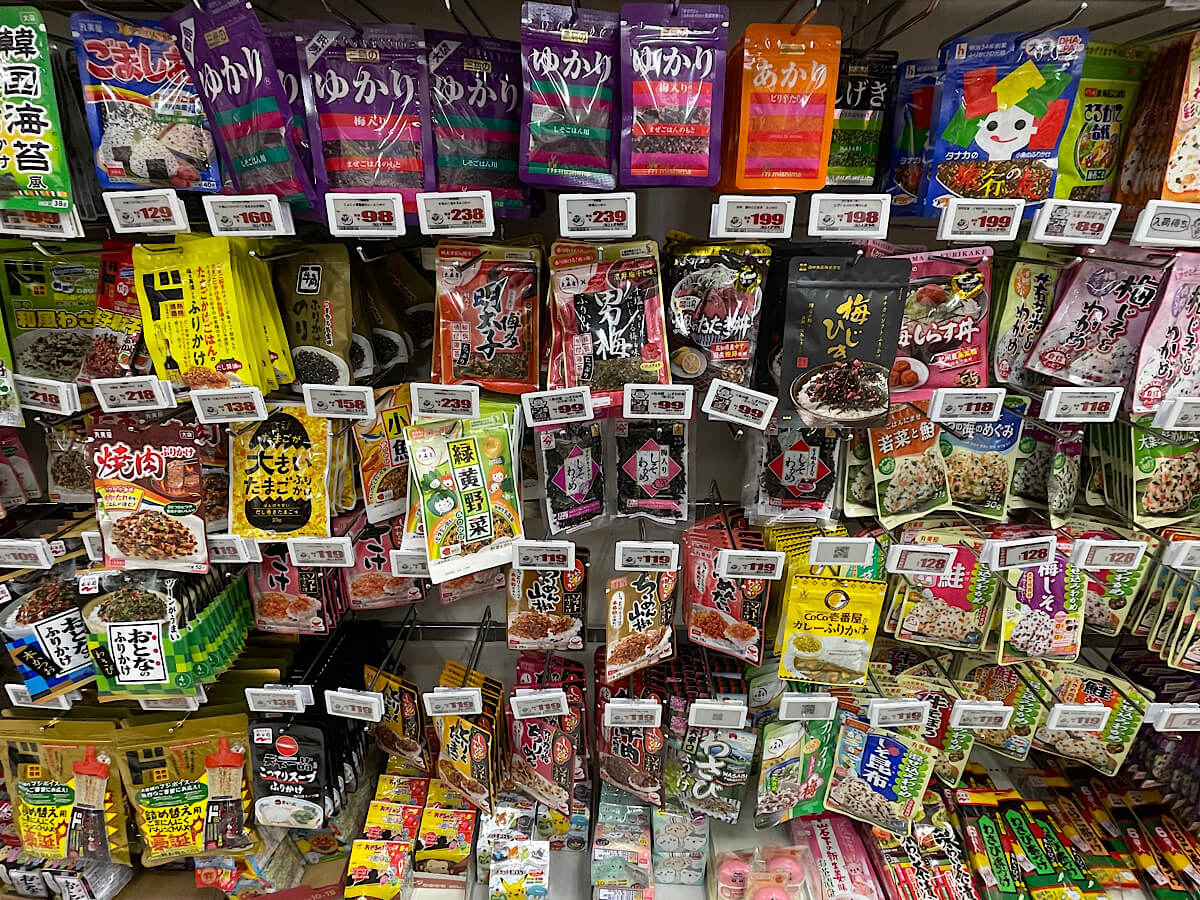
Furikake (ふりかけ). It’s a magic powder to change your ordinary rice into amazing cuisine. When I was a kid, one of my dreams was filling up my stomach with furikake and rice. My mom would often point out not to eat too much because I sprinkled furikake too much on the rice. Furikake transforms your monotonous rice into special treats. Sorry, it’s too much of an exaggeration, but I’m not going to lie, I grew up with furikake, and even now, I eat it almost every day. It’s no longer kids’ food. If you’re in Japan, it would be one of the must-tries, I’d say. Today, I’m going to share how to enjoy furikake. Let’s get started!
What Is Furikake?
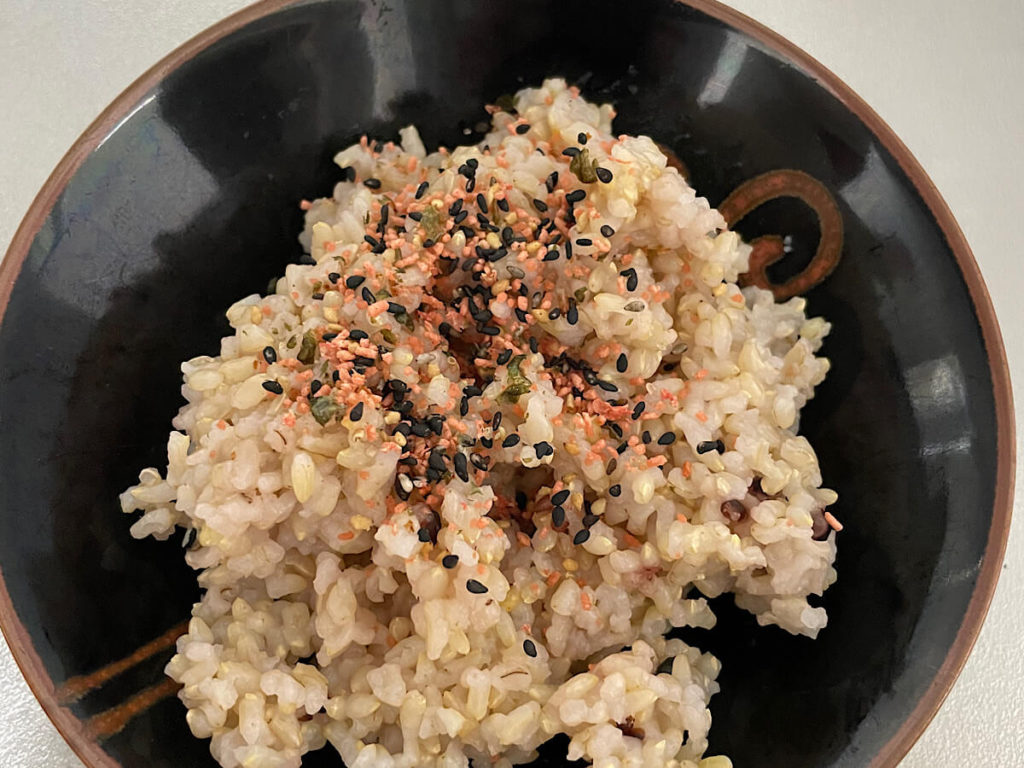
What is furikake (ふりかけ)? It’s a condiment that’s often used as a topping of the rice at home in Japan. “Furi (ふり)” means “sprinkle,” “Kake (かけ)” means “put on top.” The main ingredients are seaweed, sesame, dried bonito flakes, sugar, eggs, and so on. The price range is from 100JPY to 300JPY per package, which is packed or bottled. You can find it at grocery stores and convenience stores. It is often used for the rice in obento. Some restaurants offer free furikake for lunch. Also, you can use it as a seasoning for salads and pastas. Thus, not only kids, everyone loves it.
A Brief History
According to Wikipedia, the origins of furikake date back to the Kamakura era (12th century). At that time, they were only savory flakes of dried fish to eat with rice. It wasn’t like furikake as of today. Around 1920 (the beginning of the Taisho era), a pharmacist in Kumamoto Prefecture invented “gohan no tomo (御飯の友) to supplement lack of calcium. Although there’s controversy about the origins, it is said to be the first furikake. Since then, many food companies have launched their own furikake. In my age, “Noritama (のり玉)” pops into my mind when it comes to furikake. Noritama is one of the best selling ones still now.
How to Eat Furikake

Basically, sprinkle on freshly cooked rice. The portion is totally up to you. Nothing beats the combination of the sweetness of the rice and the savory of the furikake.
It can change leftover rice into tasty food, too. Other than that, you can use it on onigiri, noodles, salads, sandwiches, etc. I can drink alcohol with it as my last resort. It’s versatile isn’t it?
My Favorite Furikake
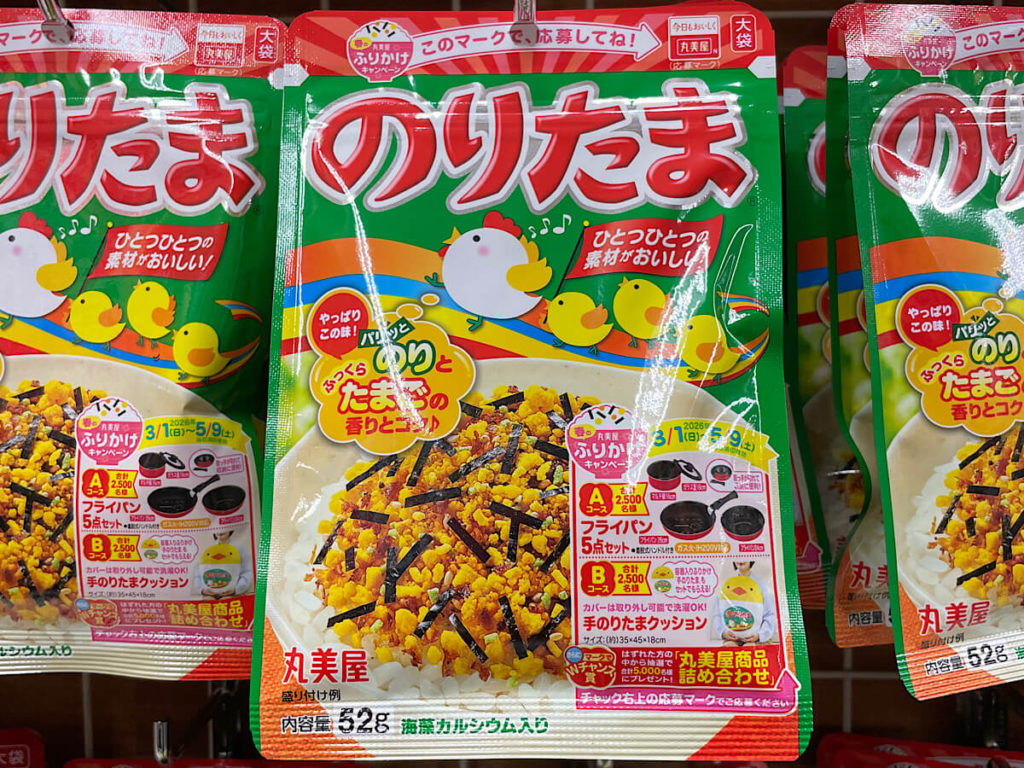
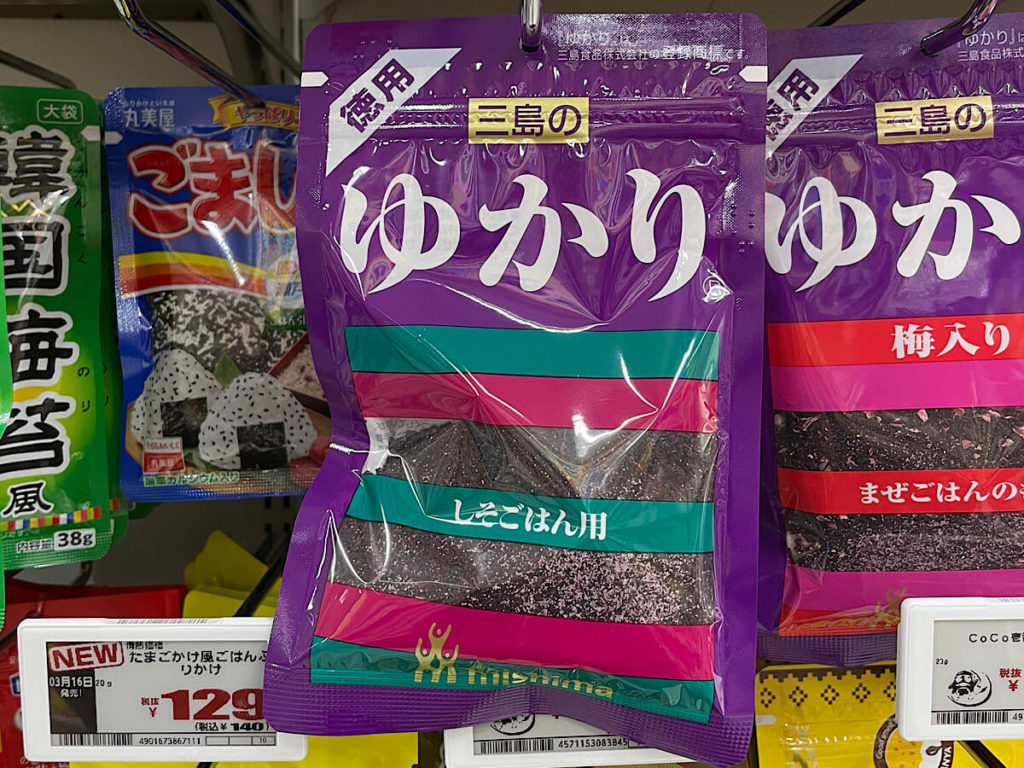
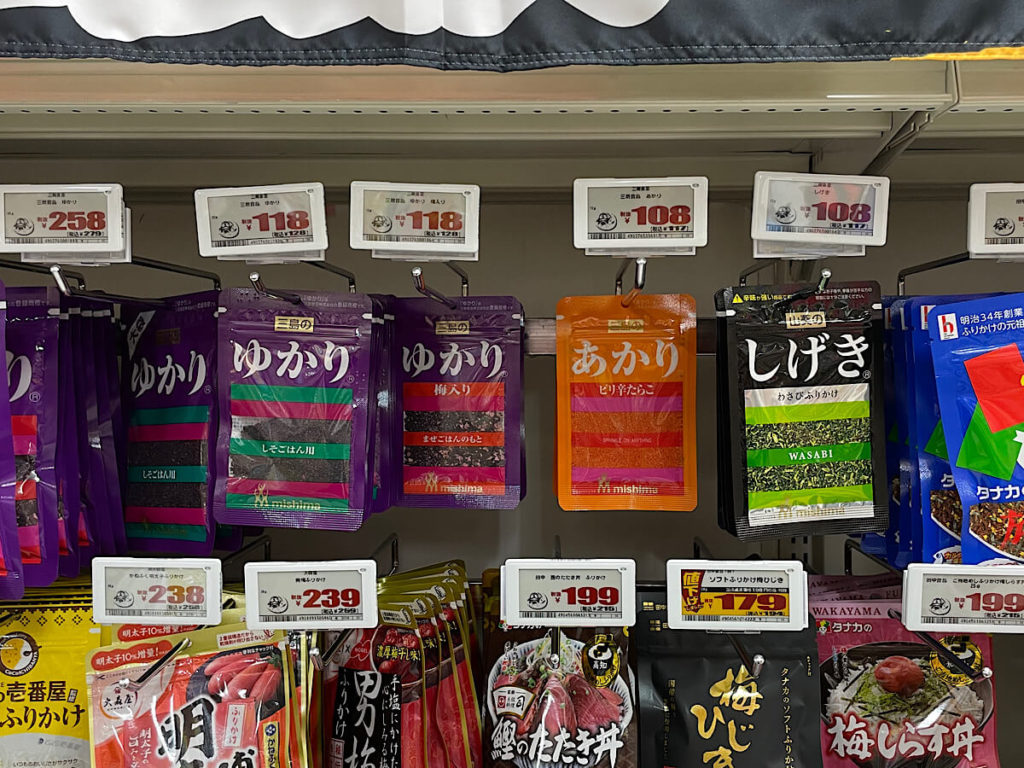
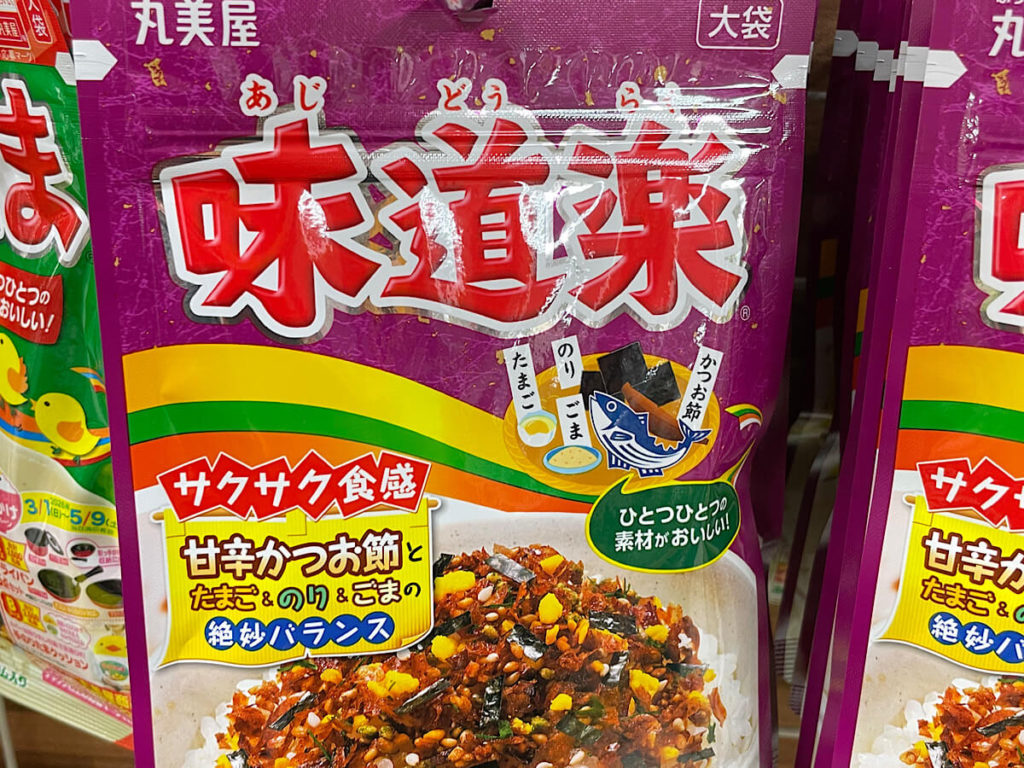
It goes without saying that it is Noritama by Marumiya Food Company. This is classic, but you shouldn’t underestimate it. Each piece of Tama, which is made of eggs, tastes hands down delicious. Eggs and seaweed are a golden formula of the perfect flavor. The texture is slightly fluffy, but you can recognize the rich flavor. Noritama is the king of furikake, I’d say. There are similar products out there, but Noritama is on another level. What about the queen? It’s going to be Yukari (ゆかり) by Mishima Foods . The main ingredients are red Japanese basil, salt and plum vinegar, so it seems healthy. Yukari is a registered trademark of the company. The reason why it was named Yukari was that back in the 10th century, there were Japanese poems called “Kokin Wakashu (古今和歌集).” In the poems, a purple color (紫色) stood for bonding with someone or something, which means “Yukari (縁)” in Japanese. Since then, Yukari’s color has shown purple, and the company hopes that people will make a connection with the iconic purple color. Also,Yukari is one of the popular female names in Japan. The taste is simple, but you can feel very Japanese things. Savory and a bit sour taste make your hungover stomach heal.
Taking Flavor Seriously
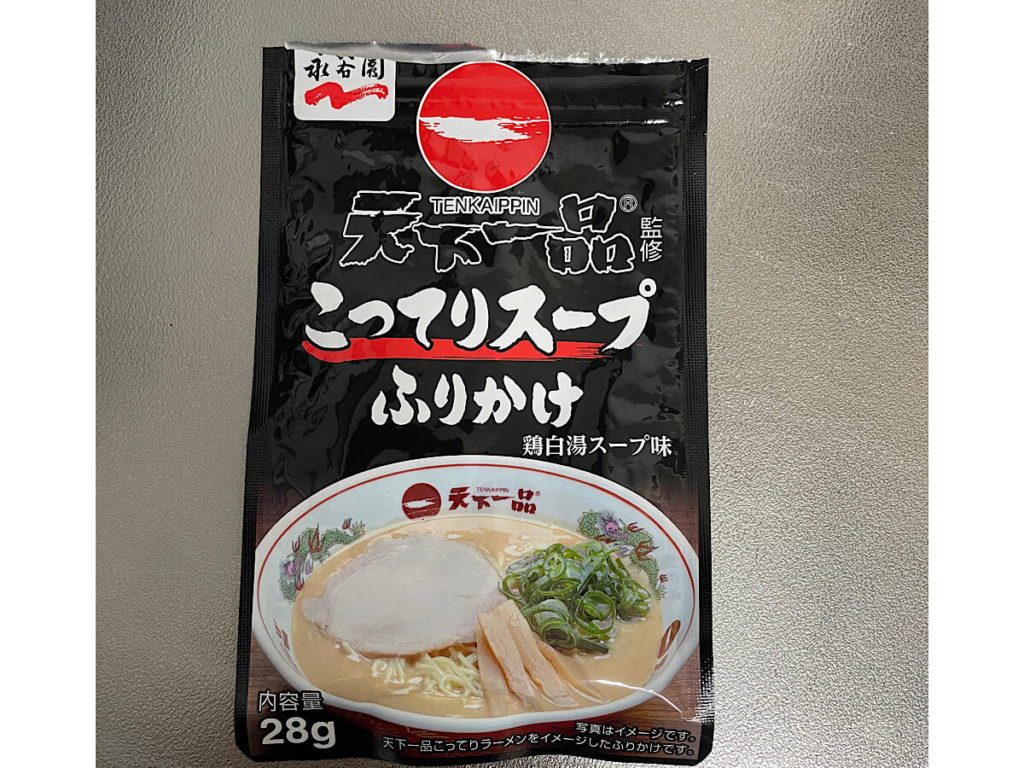
Actually, furikake can’t be the main dish, it is just a condiment. However, it has a power that can change the ordinary taste of rice into a nice meal. It’s like a great supporting actor in a movie. It’s low-key, but it is there meaningfully. Plus, there are some furikake that supplements some nutrients like calcium and DHA. The food makers are bending over backwards to bring out the flavors of the ingredients without losing the texture. Like, seaweed should be crunchy, dried bonito flakes should be savory. Even though each furikake consists of small particles,they never cut corners. That’s why kids and adults love them. You might be surprised how many kinds of furikake are on the market.
Last But Not Least
Rice is a soul food of Japanese people. That being said, how do you eat the same thing every day without getting bored? Furikake breaks through the boredom. You can appreciate subtle differences in your life. What made furikake so unique is there is no condiment for staple foods that has so many varieties of flavors all over the world. You might want to get furikake as souvenirs for your friends or family when you visit Japan. There are special local ones. I hope you like it. Thanks for taking time to read my article to the end. See you in my next article.

I worked at a trading company for many years. I live in Tokyo with my wife. Love skiing, traveling, IPAs, wine , X-treme sports, fashion, and learning English and Chinese.


 HTJ has a YouTube page! Check it out