
Occasions
How do you feel when you see people wearing kimonos? As a kimono wearer, I always pay attention to the people who are wearing them. When I help someone dress up, I also feel excited. Kimonos have a long history and several kinds, but this time, I decided to omit the history and small details, and I’ll introduce when and how Japanese people wear them. Let’s get started without any ado.
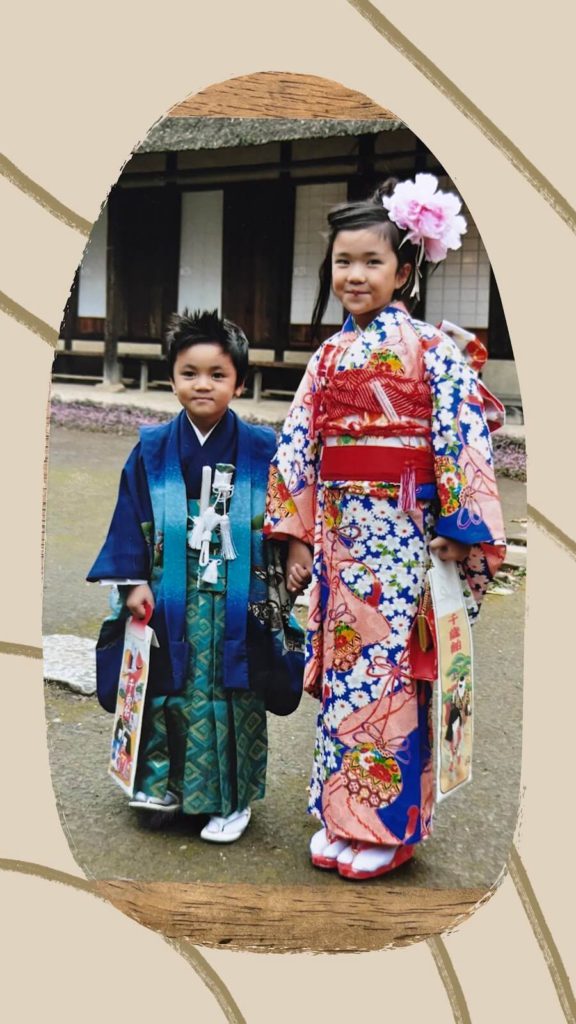
Nowadays, wearing kimonos is petering out in daily life, but some traditions still persist —Shichi(7)go(5)san(3)s*, weddings, funerals, the coming-of-age ceremonies, graduation ceremonies, tea ceremonies, traditional Japanese flower arrangements and summer festivals. At these opportunities, people experience the beauty of kimonos. As you can see, people wear it at suit-and-tie events. In most of these events, they need to choose what they wear, but people who are interested in kimonos have a good chance to wear them.
*Shichi-go-san is an old tradition to celebrate healthy growth for 3-, 5- and 7-year old children.
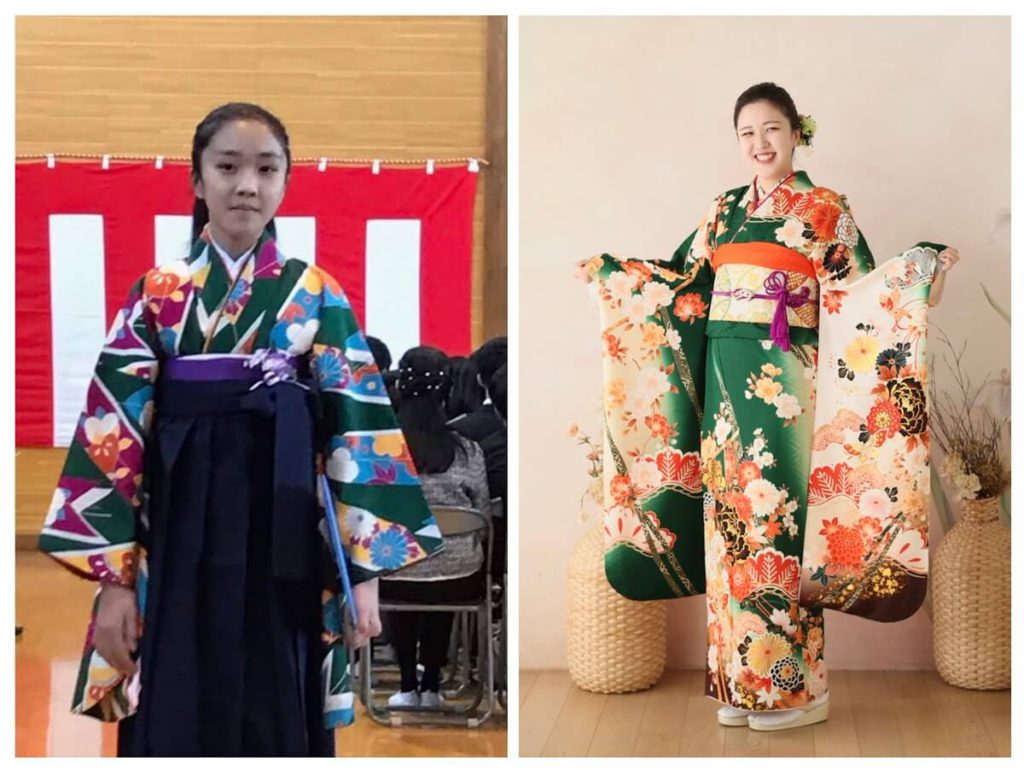
A commemorative photo of a coming-of-age (Right)
I appreciate my daughter for letting me dress her up for a long time.
What have I enjoyed? Let me tell you about it in the following section.
Attractions
1. Creating unique obi knot designs for the furisode
Basically, a furisode is a kind of kimono, which is for unmarried women. Long sleeves and gorgeous obi knots are the main features.
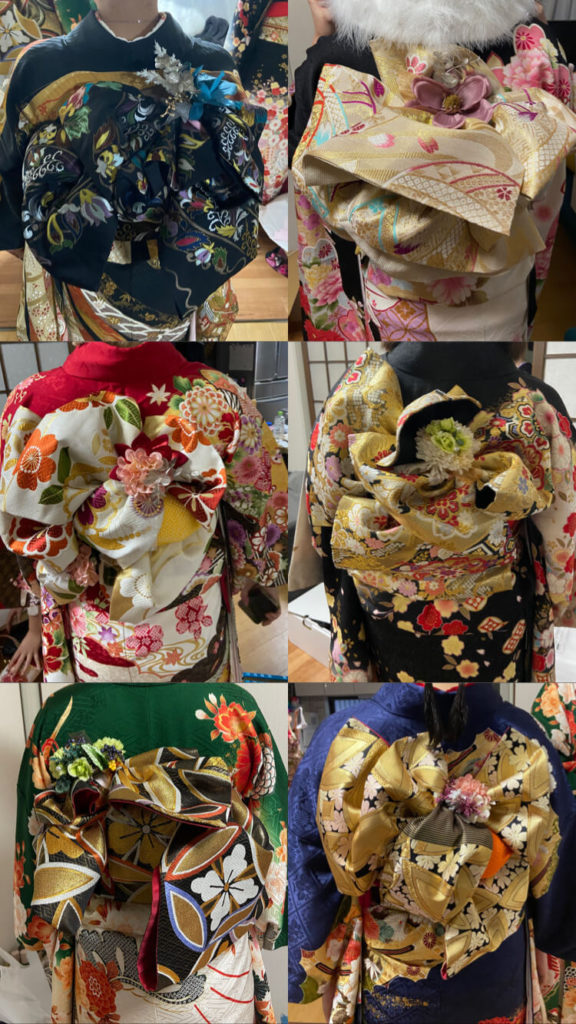
An obi is a long sash tied around the waist of kimonos, which are about 4-4.6m, 13-15ft. The length rolled around your waist varies from person to person depending on the figure. Kimono dressers shape the obi by using the rest of the length for decorative obi designs. I enjoy forming arranged obi knots and adjusting the wearer’s own personalities and height. There are three basic shapes of obi knots. Please look at the pictures below to see how I’ve arranged them. Do you recognize which ones are the same basic obi knots? It’s OK if you don’t get it. Precisely because you don’t get it, those will be one-of-a-kind and original obi knots.
2. Colors
When you coordinate a kimono, first you will choose your favorite kimono—the one that suits you. You should check what colors and patterns are good for you depending on your vibe, skin and hair color, height, and so on.
Next, you should coordinate the obi. If you can’t decide which one to choose, gold is a versatile color.
Lastly, I love this process the best. You choose kasane-eri (the decorative collar which makes you gorgeous)
The kasane-eri is also called “layered collar,” and has the meaning of “happiness upon happiness.” When you attend delightful events, why not put on kasane-eri? Look at the picture below, and you can see pink, green and light blue around the necks. These are kasane-eris. Don’t you think the coordinations are eye-opening?
Besides kasane-eri, you can see two kinds of belts around the waists. The obiage (the sash for the obi) and the obijime (the belts and accessories) **
Your intuition and preference will decide the color for these three.
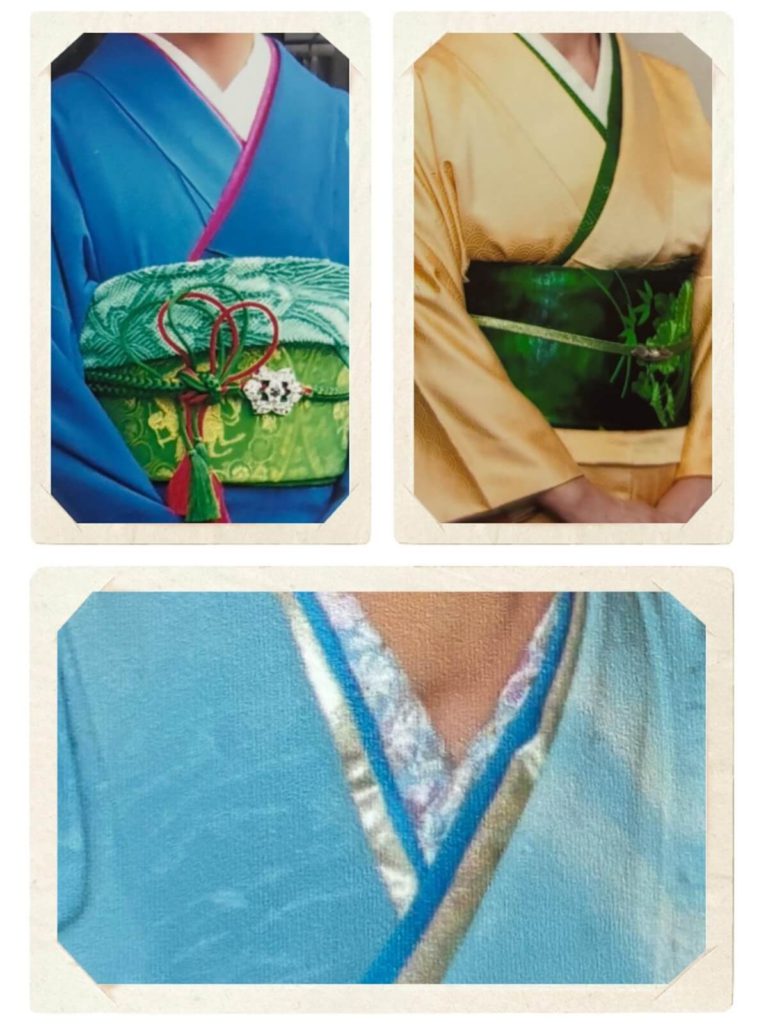
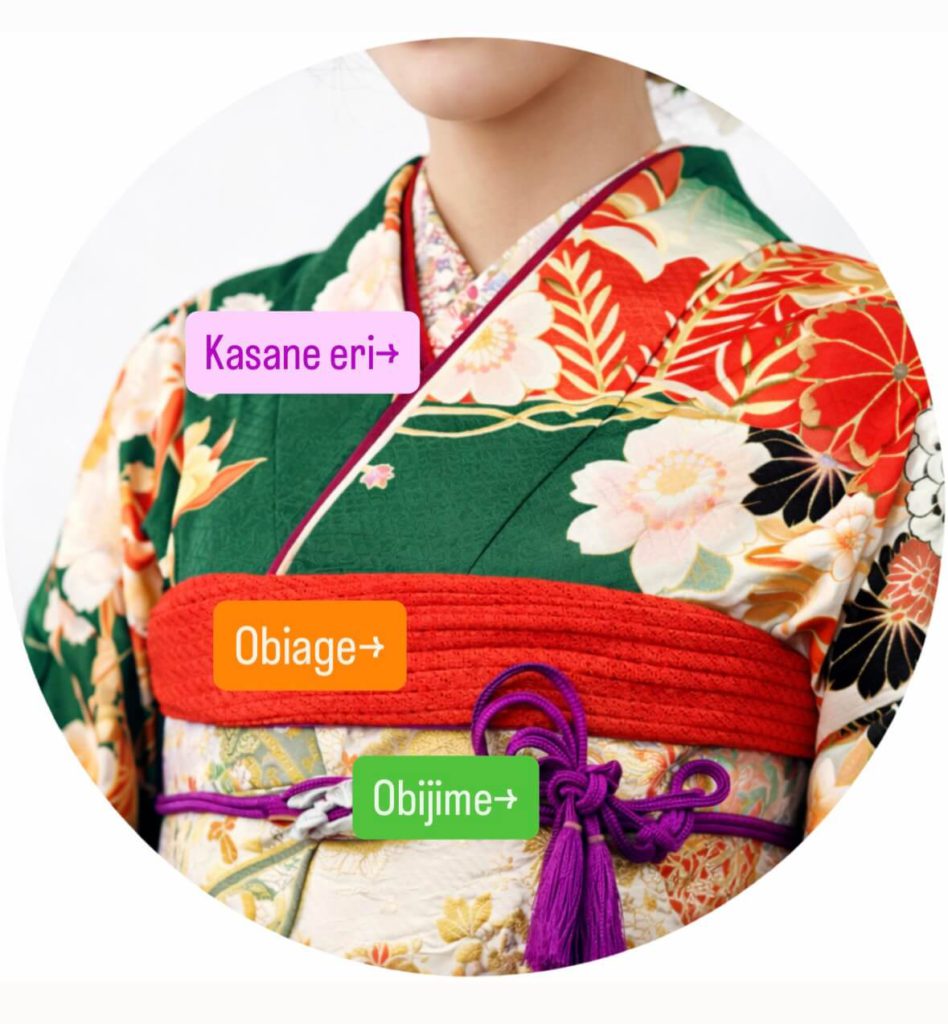
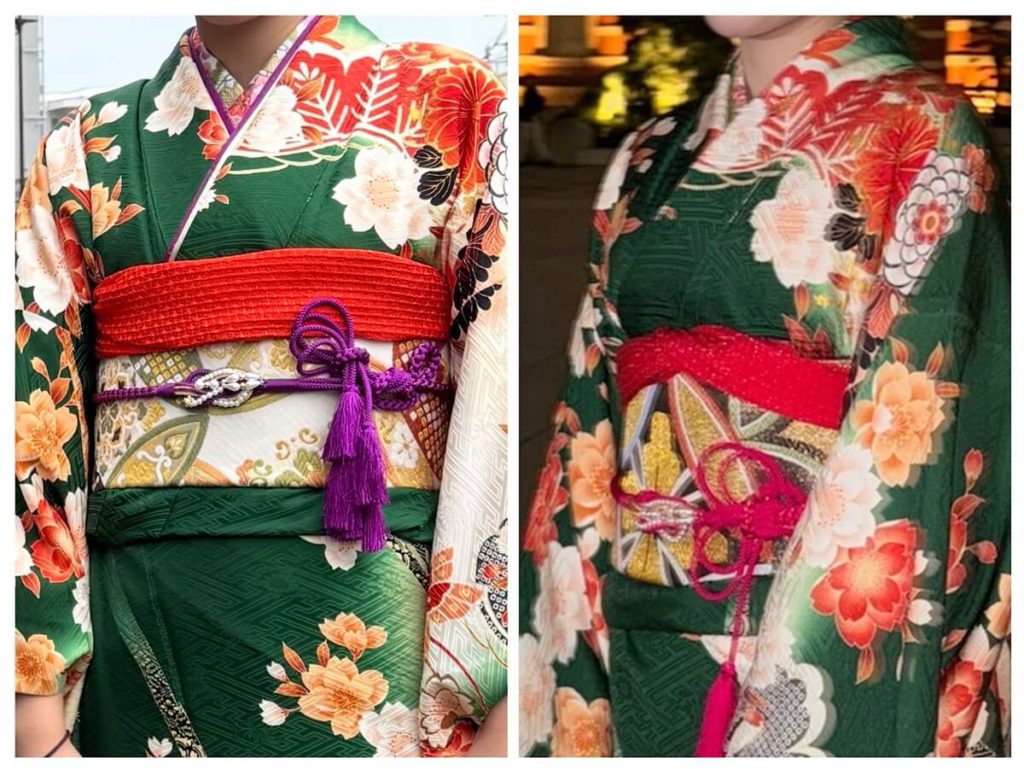
You can’t see the kasane-eri on the right, but I chose red.
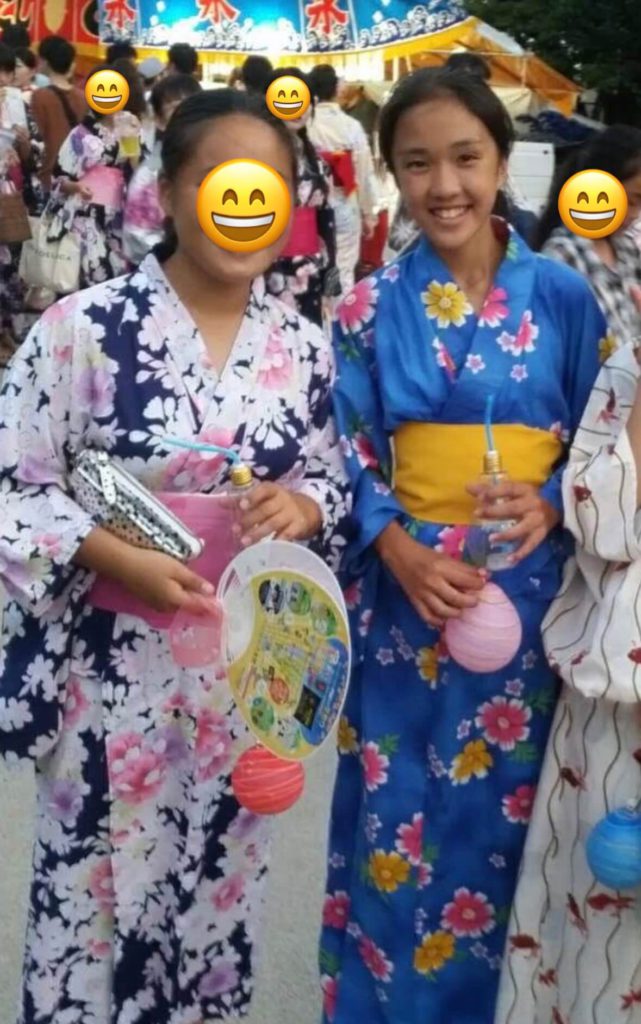
Having said that, you might be unfamiliar with kimonos and have no clue which to choose. In that case, please just put on a kimono with your favorite color on your shoulder. Kimono dressers will enjoy color coordination for you. At least, I will. Yukatas, which are a kind of kimono for summer, are thin, affordable, easy to dress up in, and you can also enjoy color coordination.
Hope
I really hope that many people over the world will experience and enjoy wearing kimonos, and I enjoy collaborating with unique fabrics around the world and making new scenes. When you come to Japan, try to take a chance to wear a kimono or yukata. Even Japanese people feel negatively about kimonos because of how tight they are around you with their strings, and they have no idea how to store and manage them. I learned how to wear a kimono without any discomfort, and I keep devoting myself to improving my skill as a kimono dresser.
I’ll introduce one of the occasions, Shichi-go-san, in my next article. I appreciate you reading to the end.

I live in Tokyo and am working at a pre-school. I’m a nature lover and enjoy experiencing the characteristics of each season. In addition, I like taking care of plants. My strength is improving myself and being able to think in a positive way.

 HTJ has a YouTube page! Check it out