
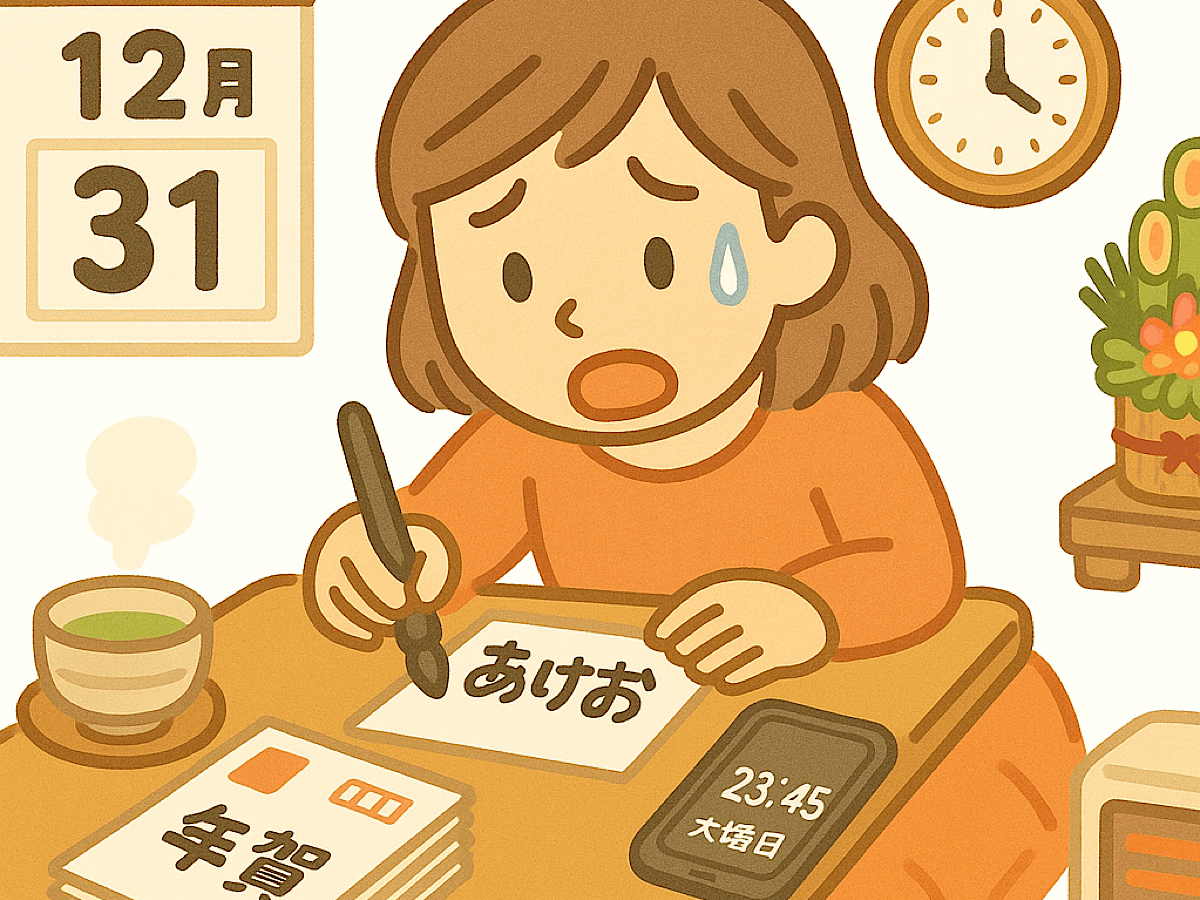
Do you know about “Nengajo (年賀状)”? It’s New Year’s greeting cards in Japan. It is safe to say that it’s one of the biggest headaches at the end of the year for Japanese people. Around Christmas holidays, Japanese people often say, “No, I haven’t written Nengajo yet…” It’s a kind of homework for us. Why do we continue to do this tradition? Or what does Nengajo mean for us? Everything I say will be completely my personal opinion, though, not representative of all Japanese people! Let’s dive in!
1. History
Back in the sixth century, in the Heian era (平安時代), aristocracy already sent New Year’s greetings letter each other, according to Wikipedia. Wow, that’s more than 1300 years ago! At that time, of course, there were only a handful of people who could read and write. In the Edo era (江戸時代), around the 16th century, it became common to send the letters for New Year’s greetings among samurai society. Also, the mail system developed then, and this helped their customs. Our modern postal service was established in 1871, and they started selling affordable post cards. Thanks to that, sending New Year’s cards spread across the country among the common people. By the time in 1887, this custom became a big thing. The peak of Nengajo was 4.4 billion pieces in 2003, but after the internet emerged, the number has been decreasing; it was 2.3 billion pieces in 2020.
2. Role Model of Writer
If you’re a decent Japanese person, you can finish writing all of them by December 25th. In that case, your Nengajo will be delivered on the first Jan, sharply! I have to tip my hat to this mail system in Japan, and I’d like to shout-out to every single mailman. That being said, I’ve never done this before 25th, I admit to myself. There are very common problems that make people panic because they can’t find the address list. You have to check which person you should send Nengajo to. Why? It’s going to be very rude if you send Nengajo to a person who had lost someone in their family in the past year. Usually they send you a notice card about this. If you get the notice and send Nengajo to them, you are completely going to be messed up.
3. Design of Nengajo
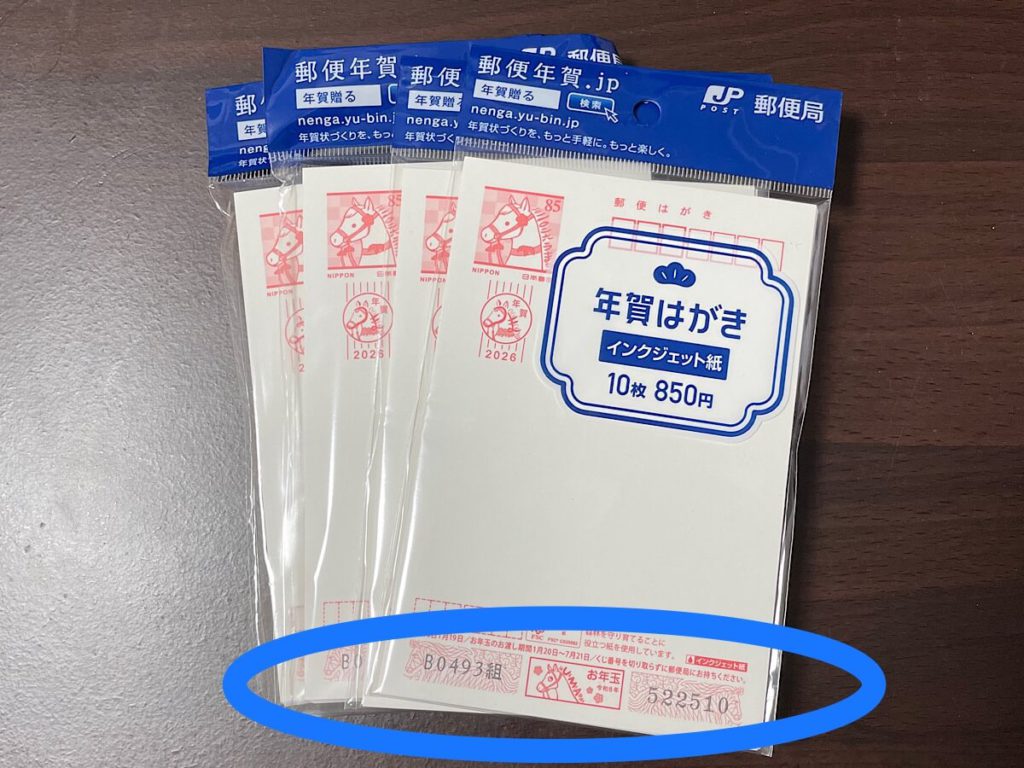
There are a variety of designs out there. Chinese zodiac with Happy New Year phrases like “謹賀新年,” “迎春,” or “Happy New Year” printed on the back side, and you can write your own message on the rest of the space. There are Japanese calligraphy styles, kawaii illustrations, Disney, Hello Kitty, and other famous characters, to name a few. Other than that, people can print out their favorite photos. Their family and pets photos make you happy. Sometimes it seems like a competition where they show off their kids growing up. Also, it might cause and argument with your family about which design you are going to choose.
4. Trap of Nengajo
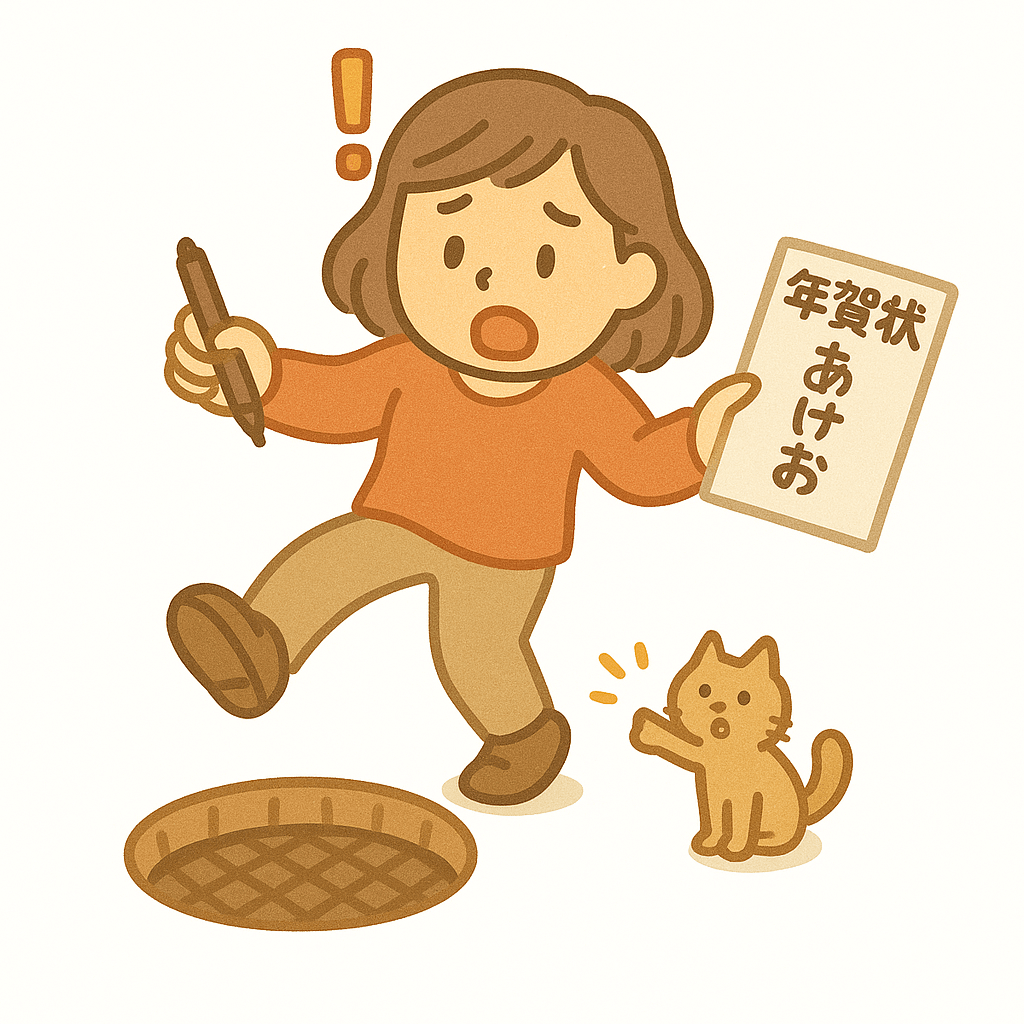
As I said in No. 2, sending Nengajo is a problem if you got the notice that someone in their family passed away. It’s going to be disrespectful and unmannered. However, sometimes you might find the notice after sending it. There is nothing you can do. You just have to pray that they don’t get upset with you. Another one is, if someone sends you a Nengajo and you didn’t send one to them, you have to send one back. It’s safe to say it’s a duty. You might think, “ Wait …? Did he or she send me it last year? Why did he or she send it this year?” That’s kind of bizarre. It might start your detective drama.
5. Nengajo Is Dying Off?

Digital vs Analog. Most young people use LINE for their greetings instead of sending Nengajo nowadays. They send the phrase “あけおめ、ことよろ(Ake one, koto yoro)”, which is short for saying officially “明けましておめでとう御座います。今年よろしくお願い致します(Akemashite omedetou gozaimasu. Kotoshimo yoroshiku onegai itashimasu), which means “Happy New Year.” As social media has developed, Nengajo might be dying, but still there’s people that prefer handwritten messages because it makes them feel heart-warmed. Recently, I often hear about “年賀状終い (Nengajo jimai),” which means “the great Nengajo retirement.” As it’s a great task of the year, for example some people send 300 or more hand-written cards before the New Year. So, especially elderly people declare it when they turn a certain age. It might be a liberation day for serving his duty for many years. To be honest, you might feel relieved but miss it at the same time.
6. A Classic Mistake
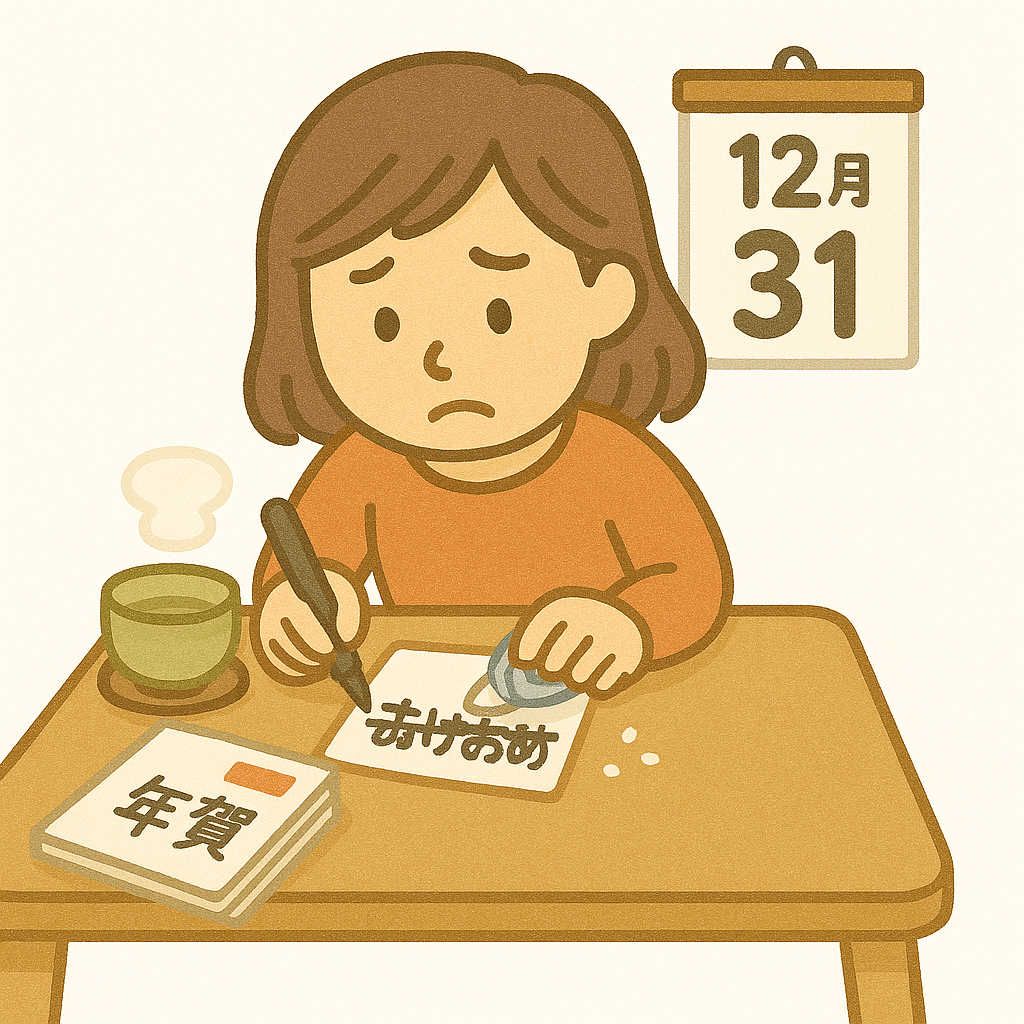
There are common mistakes. One is when they find out you used the same message two years in a row. That feels bad. Sometime, I have writers block and try to think of something better, but in the end I use the same one as the previous year. Another one is that I’m prone to making mistakes by using casual writing for my father-in-law and my wife’s relatives. Once you write incorrectly it, it’s not a good idea to use correction tape because I feel it is rude for them. I don’t want to waste New Year’s cards, but I’m afraid of writing their name in kanji. This is because we seldom write in our hand in this day and age.
To conclude
Nengajo might be similar to Christmas cards for western people. I’m not sure if they feel it as a great homework or a big hassle. After finishing it, I feel like everything is done this year and I have some fulfillment. I always decide to write it early before Christmas, but as of today, in the middle of December, I haven’t finished it yet. Oh man, I can’t write them by the end of the month. That being said, thanks to our great mail delivery service in Japan, your Nengajo will be delivered by January 3rd even though you send it on New Year’s Eve. I think most Japanese people are on their New Year holidays, even on the 3rd. That’s just some additional time, isn’t it? Who cares? Nothing beats receiving hand written Nengajo, and sometimes I’m comfortable with the fact that there are some people who I only contact once a year. It might be a hard time when you’re all out of things to say on the last day of the year. If you’re in Japan, why don’t you try to write Nengajo in Japanese? Your friends and coworkers will be surprised and happy, especially with your handwritten Japanese messages. You can ask their private address in order to send them. That’s a very natural and polite way to do things. Looking back, I used to ask for my boss’s address to send Nengajo. It might be a good approach to get a promotion, but once you ask them, it’s going to be a mandatory task though. Thanks for taking time to read my article to the end. Happy belated New Year, hope you guys have a wonderful year! See you in my next article.

I worked at a trading company for many years. I live in Tokyo with my wife. Love skiing, traveling, IPAs, wine , X-treme sports, fashion, and learning English and Chinese.
 HTJ has a YouTube page! Check it out