
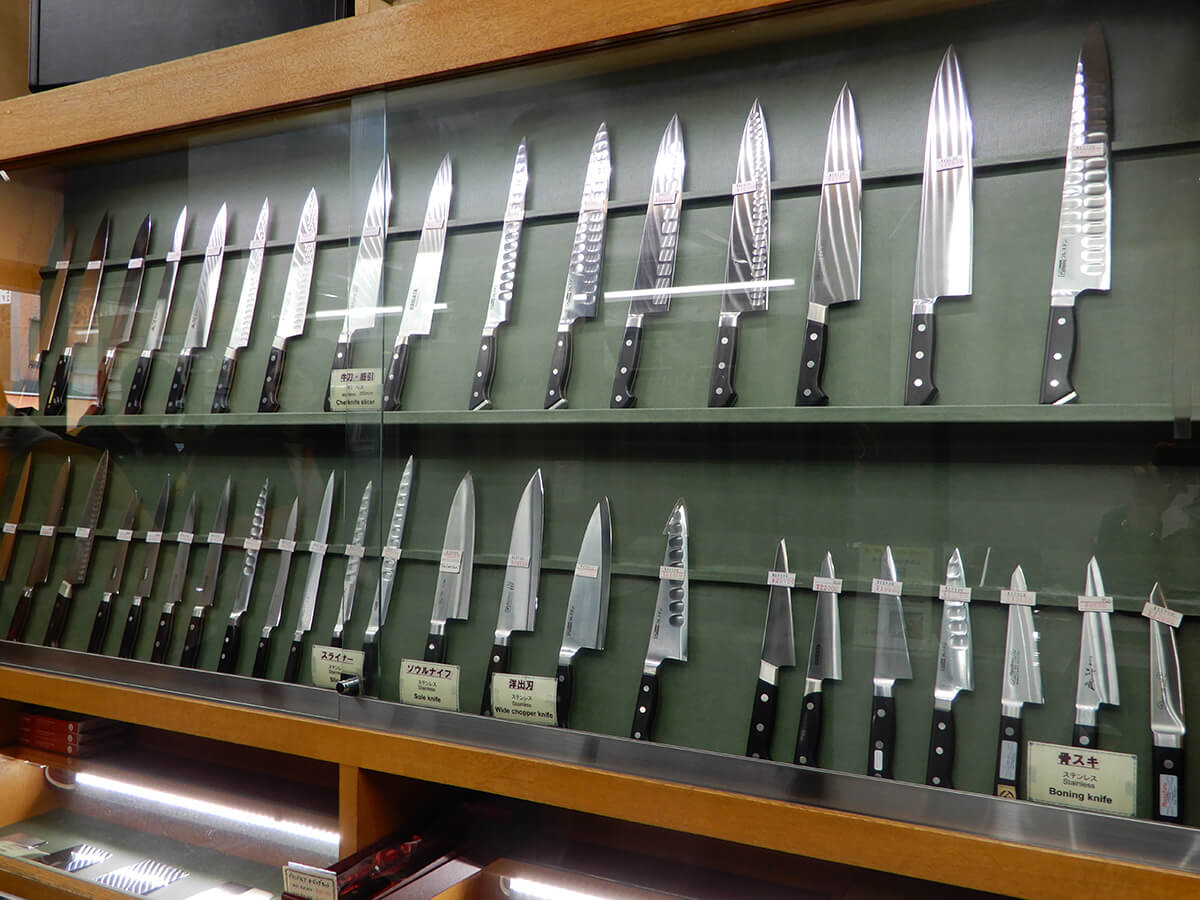
What kind of kitchen knife do you usually use? Lately, I often see the knife shops in the tool district crowded with foreign tourists. Why have Japanese knives recently begun to attract attention from around the world? It can be said that the boom in delicate Japanese cuisine sparked the world’s recognition of the excellence of Japanese kitchen knives. What is it that attracts them so much? Let’s explore their appeal through their history and the differences between Western and Japanese knives.
1. The Difference between Japanese Knives and Western Knives
【Blade shape】
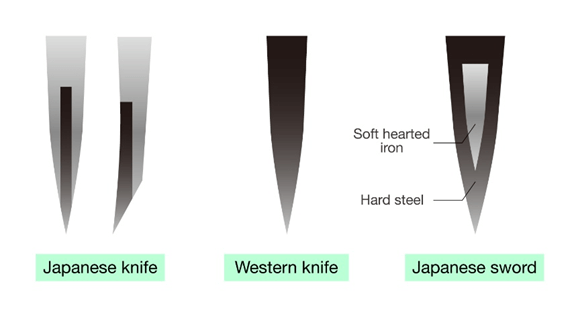
The biggest difference is that Japanese knives are single-edged. The flat surface of the single-edged blade on Japanese knives is not actually flat, but has a gentle curve, so the blade is designed so that ingredients like sashimi won’t stick to it. The blade has an acute angle and is delicate, so when cutting hard ingredients, the blade tends to chip. Whereas Western knives are double-edged with an obtuse angle. They are suitable for cutting hard items such as cheese.
【Material】
Japanese knives are made from two types of metal (hard steel and soft iron) bonded together. They prioritize sharpness, so they contain more carbon and are vulnerable to salt and saltwater. Therefore, you need to pay attention to daily maintenance.
Western knives have one type of stainless steel. They have the advantage of being rust-resistant. Even today, Japanese knives are handmade using traditional techniques by skilled craftsmen. First, different materials—steel and iron—are heated to approximately 1000 degrees Celsius, then hammered together to fuse them. They are then quenched in cold water to strengthen the metal. This process is repeated again and again, and finally the blade is sharpened to a fine edge.
Japanese knives tend to be sharper, harder, thinner, and lighter than German ones. This makes them well-suited for delicate and precise cooking tasks such as slicing fish and cutting vegetables. However, on the other hand, they also have the drawback of being prone to chipping or breaking. Meanwhile, sturdy and durable German knives are ideal for heavy-duty tasks like cutting hard vegetables, meat, and bones.
2. The History of Knife Making
The techniques of knife making have a very long history, having developed based on the traditional Japanese sword-making techniques.
▶the Heian period ~ the Kamakura period (9th-14th centuries):
Japanese sword ironworking and forging techniques developed dramatically. The technology, repeated forging, quenching, and combinations of steel and soft iron, were established in this era.
▶Muromachi period (14th–16th centuries):
Specialized blades began to emerge not only for weapons but also for culinary purposes.
▶The Edo period (17th-19th centuries):
In this peaceful era free from war, swordsmiths switched to making kitchen knivesand farming tools. During this era, the major knife-producing areas that continue to this day, listed below, were founded.
- Sakai (Osaka): A knife-producing region with traditions dating back to the Edo period, favored by Japanese chefs
- Seki (Gifu): Techniques tracing thelineage to the Japanese sword
- Tubamesanjyo (Niigata): A major hub for metalworking, renowned for its Western-style knives
- Echizen (Fukui): Highly skilled in hand-forging techniques
3. Types of Japanese Knives
Japanese kitchen knives come in various types depending on what you plan to make and the kind of ingredients you intend to cut. Let me introduce some of the most representative ones.
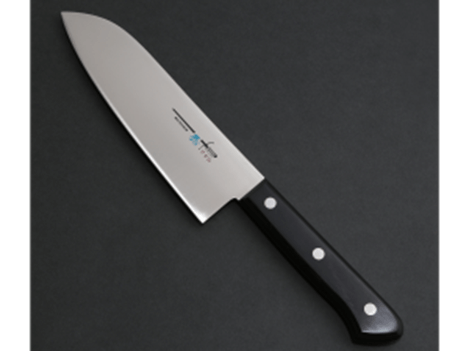
【Santoku knife 三徳包丁】
The Santoku knife is known as Japan’s all-purpose knife. Santoku means “knife with three virtues,” and true to its name, it excels at handling various ingredients like meat, fish, and vegetables. Characterized by its flat blade and rounded tip, it cuts easily and allows for smooth progress in cooking tasks.
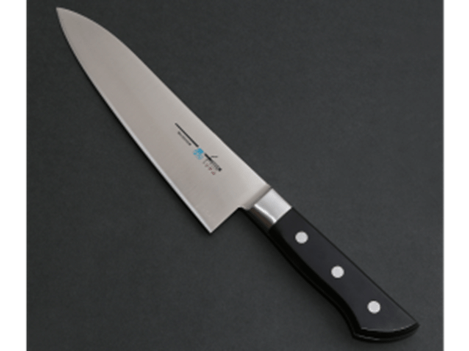
【Gyuto 牛刀】
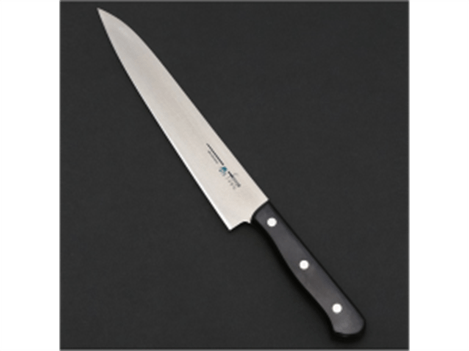
The gyuto knife resembles a Western chef’s knife in shape but is characterized by being lighter and thinner than Western knives. Characterized by its straight blade, it efficiently cuts a variety of ingredients such as meat and vegetables, making it a versatile utility knife.
【Deba knife 出刃包丁】
The deba knife is primarily used for filleting fish, excelling at cleanly separating the head and bones. It features a thick, sturdy blade. Typically, it has a thick spine and a rounded tip. This shape is ideal for cutting through fish bones and allows for powerful use.
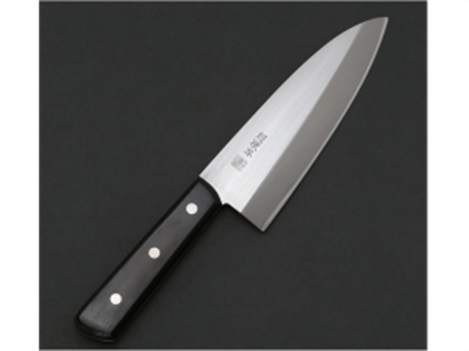
【Sashimi knife 刺身包丁/ Yanagiba knife 柳葉包丁】
The sashimi knife is characterized by its exceptionally long, narrow blade, and is a specialized Japanese knife for preparing sashimi. Typically single-edged, it boasts a sharp cutting edge, making it ideal for slicing raw fish thinly. Its long blade allows you to cut through the fish in a single motion, preserving the delicate fibers and creating a beautiful cross-section that retains the fish’s flavor.
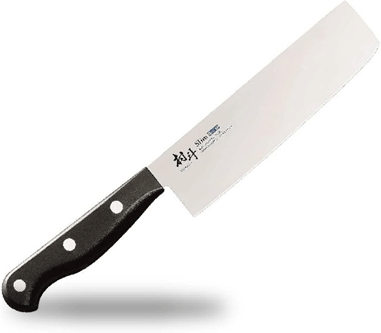
【Nakiri knife 菜切包丁】
The vegetable knife features a flat, wide blade. It cuts cleanly and easily through vegetables. It is typically double-edged. Its flat, wide blade makes it easy to cut large vegetables like cabbage and is ideal for slicing vegetables evenly. It is not suitable for detailed work.
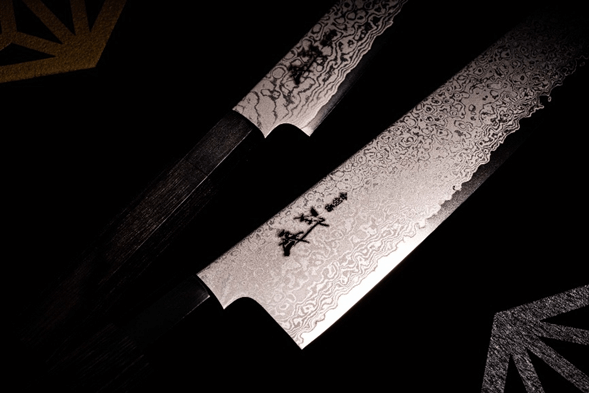
【Damascus knife ダマスカス包丁】
This is a type of Santoku knife featuring a patterned surface. Damascus patterns are beautiful rippling designs that appear on the surface of blades, each one possessing a unique and one-of-a-kind appearance. Its sword-like appearance makes it very popular with foreigners because it looks like a Japanese sword. The name “Damascus” comes from the legend that the first knives were forged in Damascus, India. This undulating pattern combines sharpness with artistic flair.
4. Sharpening Techniques
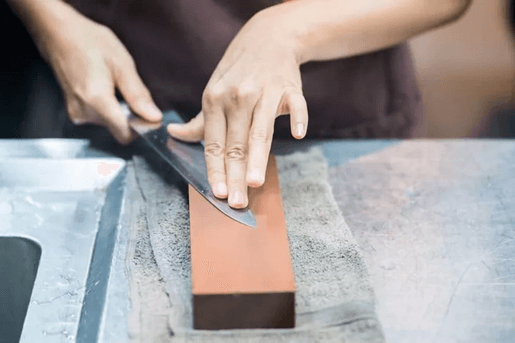
“Sharpening 研ぎ” can be considered one of Japan’s traditions. A kitchen knife is a tool that requires sharpening to use, so regular sharpening is essential to restore its sharpness. A sharp knife with a thin blade cuts well but is delicate. Therefore, it is important to avoid cutting hard things, such as frozen foods or cheese. When knives are sharpened using a whetstone, a simple method of aligning the flat surface of the knife with the flat surface of the whetstone is employed. Using a simple sharpener isn’t bad, but sharpening repeatedly with it tends to make the blade thicker. If you don’t feel confident sharpening knives yourself, you can ask to have it done at a knife specialty store.
Additionally, to make Japanese knives last longer, it’s important to wash them by hand rather than in the dishwasher and dry them thoroughly to prevent rust.
5. Recommendations for You
If you want to find a Japanese kitchen knife that suits you, I recommend visiting a long-established specialty store with Japanese staff that can advise on your skill level and ease of maintenance. Nowadays, even Japanese cuisine chefs sometimes use stainless steel knives, so from a maintenance standpoint, stainless steel is easier for people overseas to handle than carbon steel. Additionally, the handles of Western knives cannot be repaired once broken, but Japanese knives can be repaired at least three times.
■Recommended long-established shops
【Tokyo Asakusa Kappabashi】
- “KAMATA Hakensha かまた刃研社” (Established in 1923) https://www.kap-kam.com
【Osaka Sakai / Nanba】
- “Sakai Ichimonji Mitsuhide 堺一文字 光秀” (Established in 1953) http://www.ichimonji.co.jp
- “JIKKO knives 實光刃物” (Established in 1901) https://www.jikko.jp
★Final thought
I hope this article serves as a good opportunity to learn about the appeal and characteristics of Japanese knives. As mentioned earlier, it is a misconception that a sharp kitchen knife can cut anything. The sharp kitchen knife with its thin blade is extremely delicate in exchange for its excellent cutting performance. In fact, it is true that overseas customers often experience problems with blades chipping when attempting to cut hard objects, just as they would with Western knives. I believe that you can improve your cooking skills with not only wonderful Japanese knives, but also the art of sharpening.

Business training instructor. I’m originally from Takarazuka in Hyogo Prefecture in the Kansai area. Now I live in Yokohama. I love exercising, traveling, watching movies, art, and nature.


 HTJ has a YouTube page! Check it out