
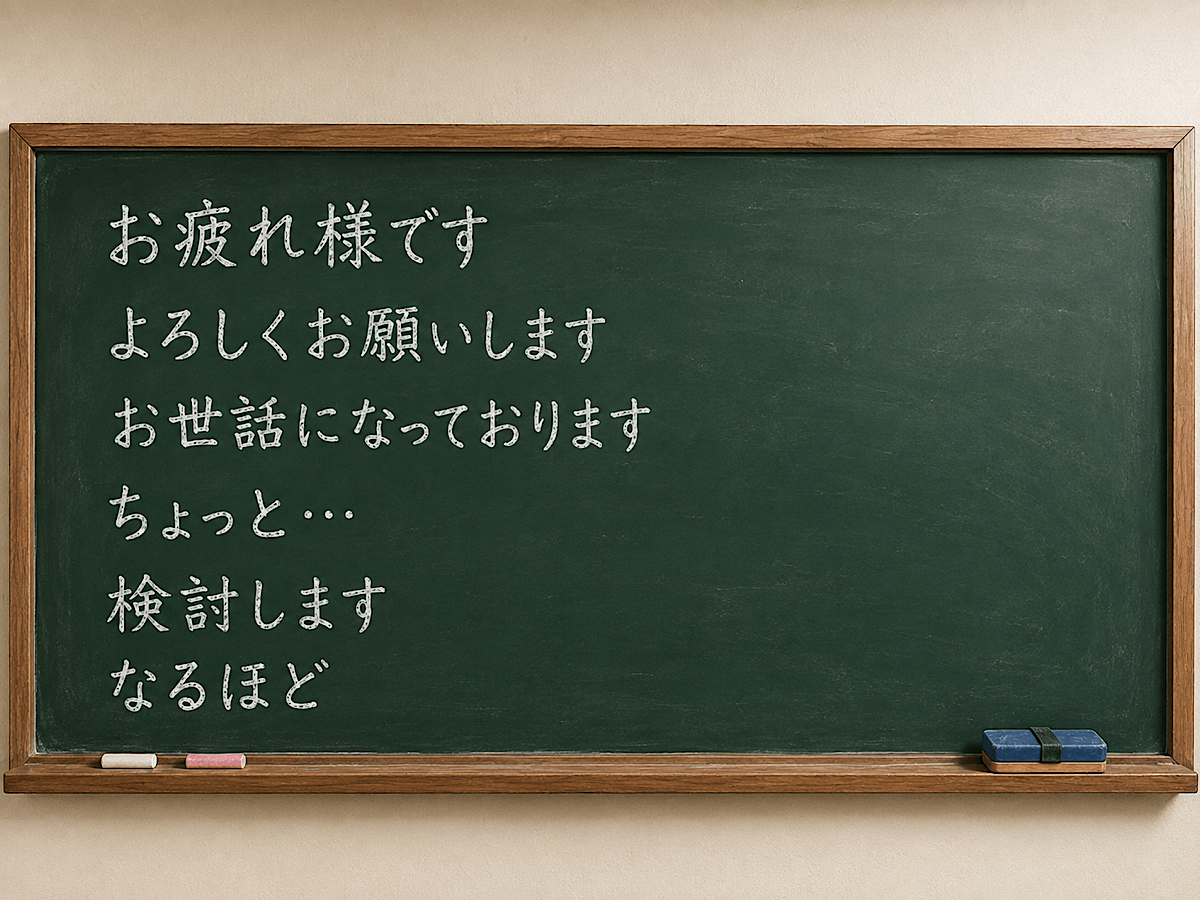
When you’re a rookie in a Japanese workplace or the broader Japanese culture of professionalism, you might hear workplace phrases that your co-workers say often. After learning Japanese, you realize some phrases are used in a different meaning from what might be expected. If you don’t get it, you might not understand 100% what they are talking about. But don’t worry about it, I will get you covered for some basic phrases. Let’s get started!
1. Otsukaresamadesu (お疲れ様です)
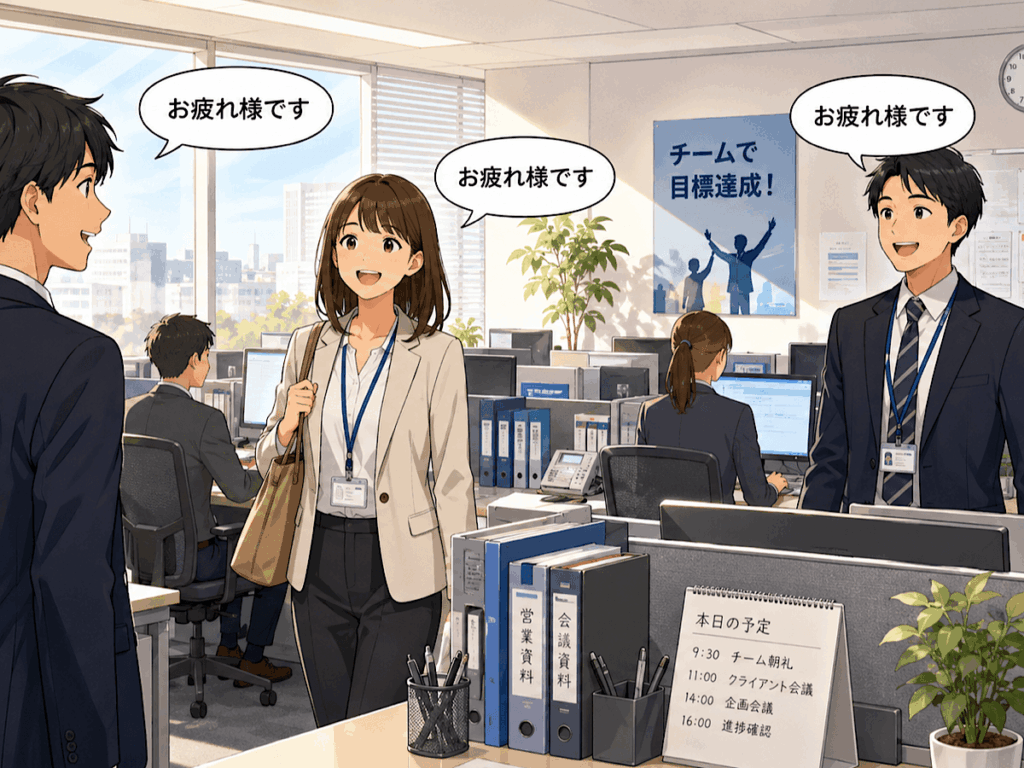
In the fresh morning, you might hear them saying “Otsukaresamdesu.” Literally, it means “You are tired.” You might feel, “Wait, why are they so tired first thing in the morning?” Actually, they aren’t—or, at least, not really. This phrase is a means of politely saying hello to your boss and coworkers. You can say it and write in your email each time. It’s a versatile phrase for showing politeness.
For example, you can write in your email as your first sentence. It might feel a bit redundant to use it so frequently, but that’s what Japanese professional culture is: consistent politeness, respect, and routine. When leaving your company, you can say a bit longer about “desu,” like ”otukaresama-de-e-e-su.” The elongation of the “e” vowel will make it sound more natural and a bit more like native speakers.
2. Yoroshikuonegaishimasu (よろしくお願いします)
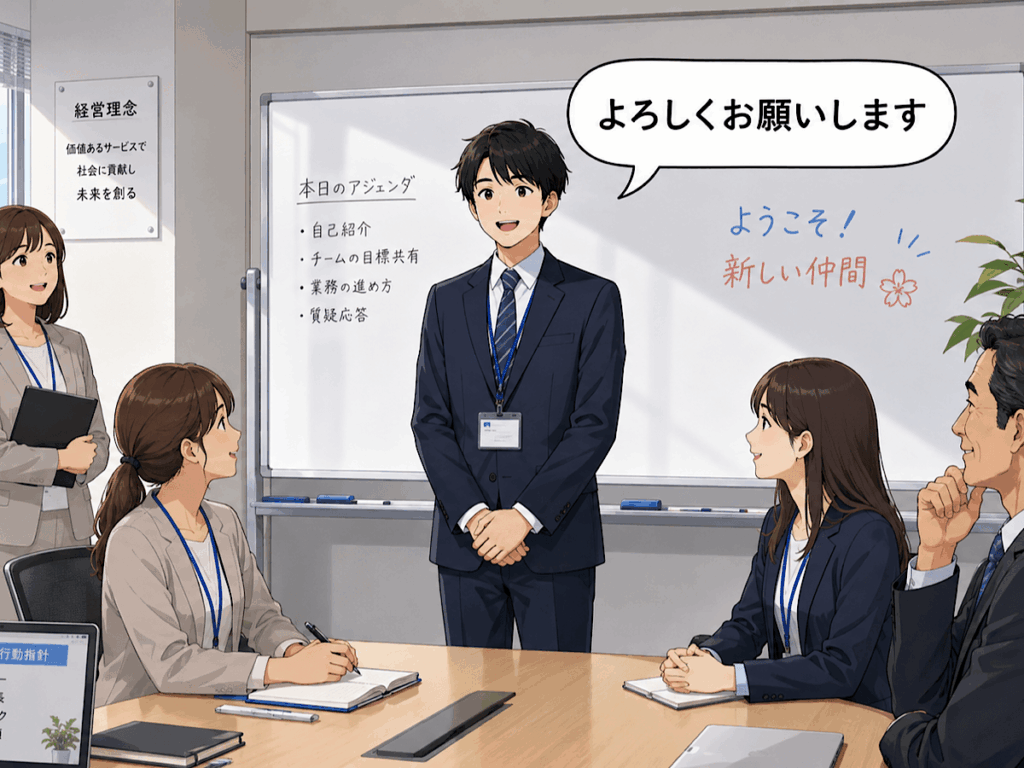
The direct translation is, “Please do good things for me in a favorable manner.” Well, actually, it depends on the context. Most of the time, there are three situations.
At first, when giving your introduction, it is used the last phrase to finish your inro. In this case, it means, “Nice to meet you.”
Second, when writing your emails, it can be used to finish it. It means “Best Regards,” and “Thanks in advance.” Very handy!
Finally, when you ask someone to do something, you can say it at the end of the conversation. It means “I’m counting on you.” Of course, it is used in the writing as well in this manner, as well.
3. Osewaninatteorimasu (お世話になっております)
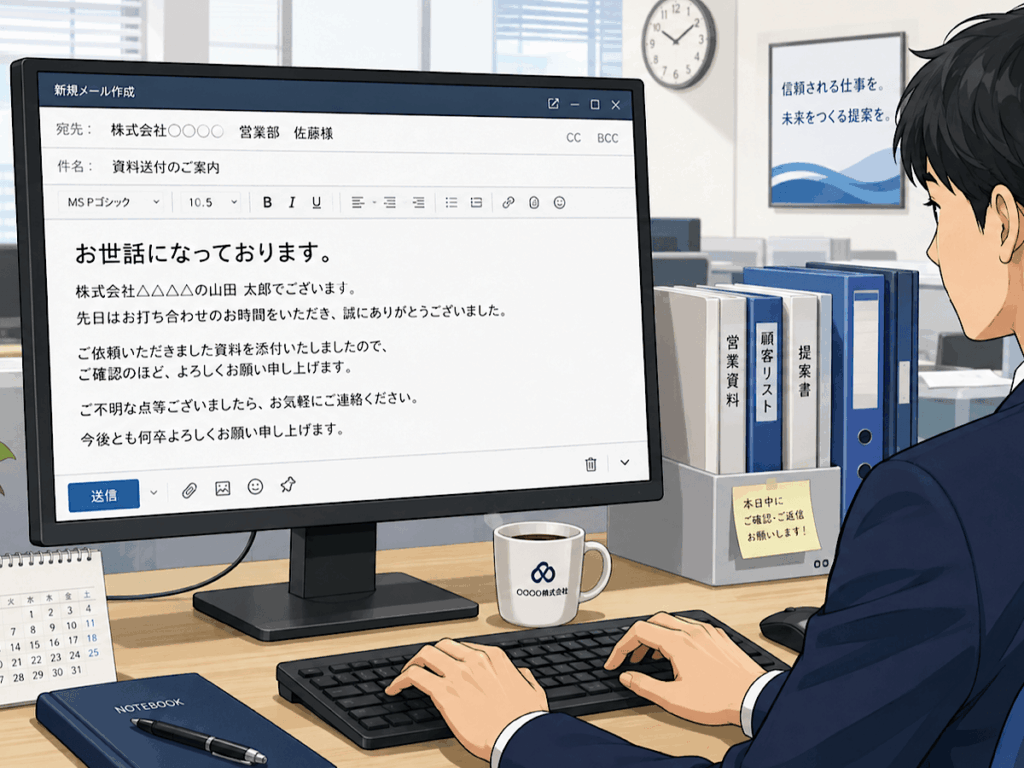
The direct translation is, “Thank you for taking care me.” Actually, it doesn’t sound right in real life. You might be confused that it is used for someone who takes care you in real life but, it is used as a business greeting instead of saying “Dear or hello.”
Even if you haven’t met someone before, you can use this phrase in the beginning of your professional association with them. In my view, it is used especially for suppliers and subcontractors. When you use it for your clients, it’s better to add “itsumo (いつも),” which means “every time,” indicates thankfulness for always working with us, then, “itsumo-osewaninatteorimasu” is suitable for your clients.
4. Chotto… (ちょっと)
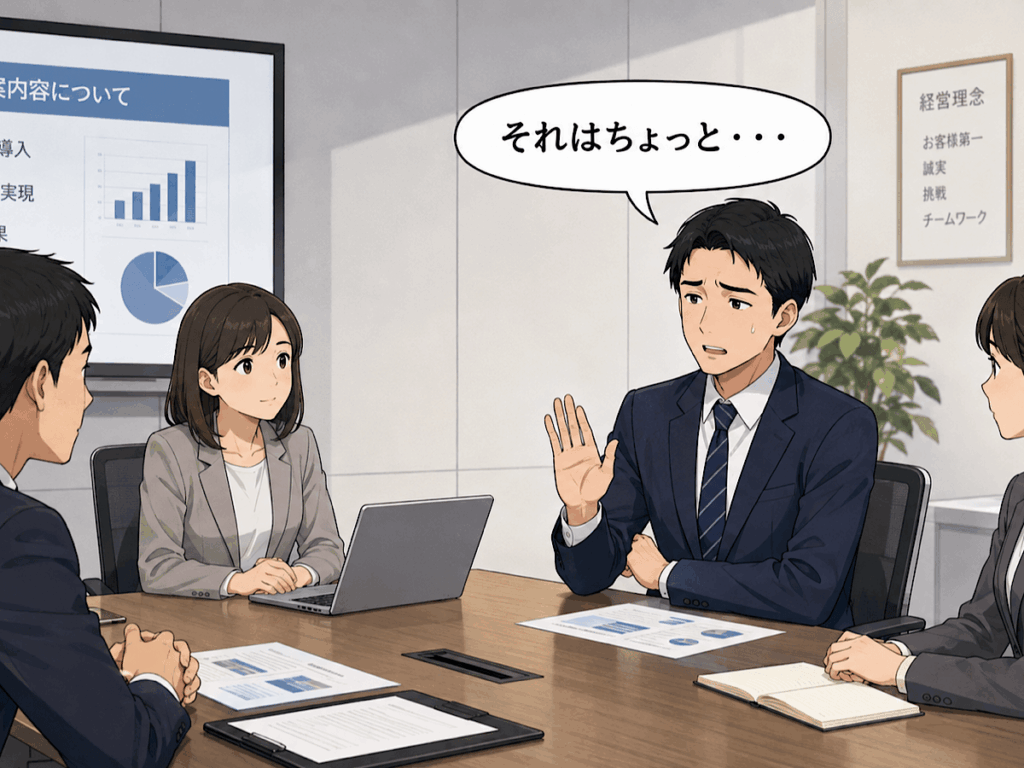
You might hear “sorewa chotto…(それは、ちょっと)” in your workplace. Directly translated, it means , “ a little.” It is used in the literal sense, but, of course, you therefore have to mindful of using it during the negotiations.
When you negotiate with your counterpart, they say “sorewa chotto…,” it means they’re warning that the ask might be too difficult. It’s NOT “a little possibility.”
Japanese business people would never outright say, “Muri (無理),” which means “can’t do it” or “impossible!” It is used to turn down your offer politely. You shouldn’t expect them to directly deny your request. Please remember that.
5. Kentoshimasu (検討します)
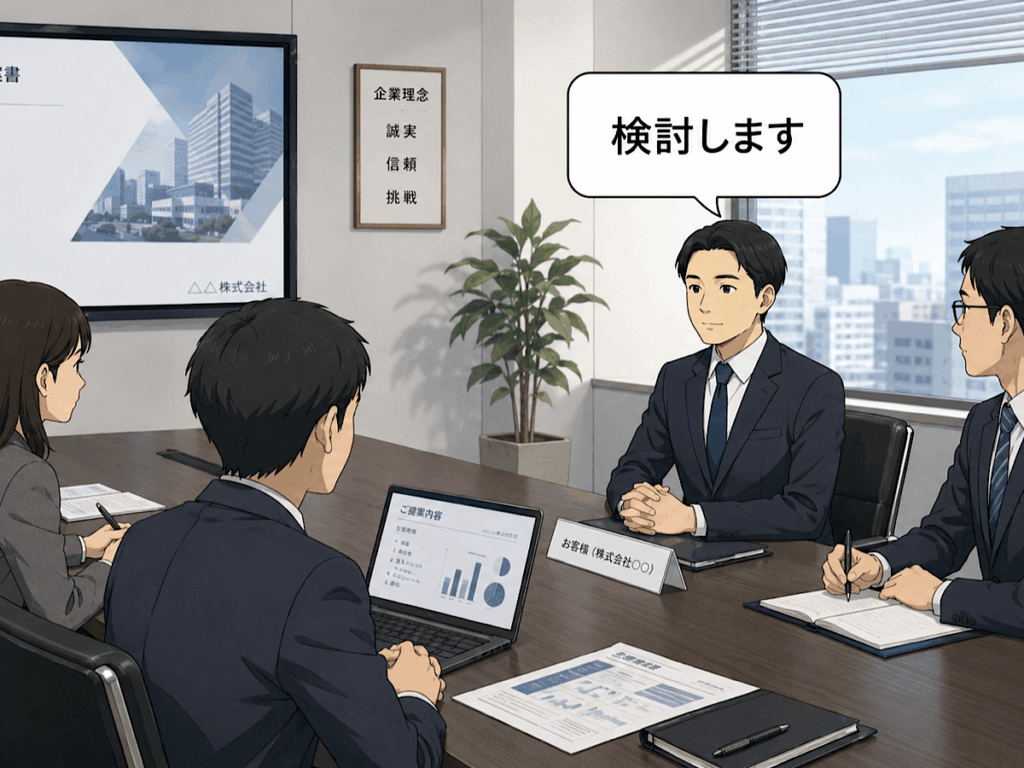
“We will consider it,” is the direct translation Literally, it’s correct. However, it often means to say NO in a calm manner. As was the case with No.5, “chotto kentoshimasu” is one of the worst combos to hear during a negotiation, in that you can’t expect any agreement to your request at all.
6. Naruhodo (なるほど)
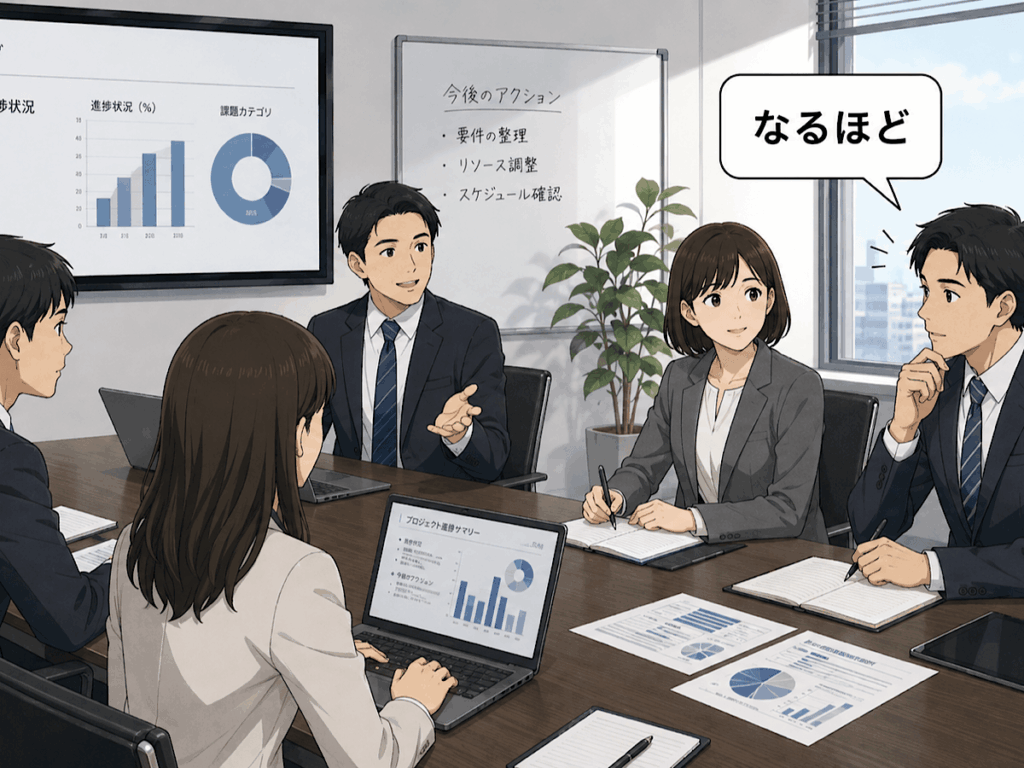
It means “I see,” or “That makes sense.” Actually, it means “I’m listening” in reality, when you’re engaging in a conversation. People often use it during the conversation, but what you should keep in mind is that it doesn’t mean agreeing with you. Even if someone says this five times in the conversation, it doesn’t necessarily mean they agree with you. Rather, it should be taken as their way of acknowledging that they understand what you are saying and are actively paying attention to your words.
How was that? These Japanese work phrases might confuse you because you can’t find in the dictionary. Nowadays, you might be able to find the real meaning by using AI. Sometimes, when you make mistakes in the conversation, it actually helps your relationship grow better. People in Japan more often value indirect manners of speaking, and respect when their colleagues and professional associates can read in between the lines, I’d say.
When in doubt, just say “Yoroshikuonegaishimasu.” It works for everything, I promise. Thanks for taking your time to read my article to the end. What phrase confused you the most so far? See you next in my article!

I worked at a trading company for many years. I live in Tokyo with my wife. Love skiing, traveling, IPAs, wine , X-treme sports, fashion, and learning English and Chinese.


 HTJ has a YouTube page! Check it out