
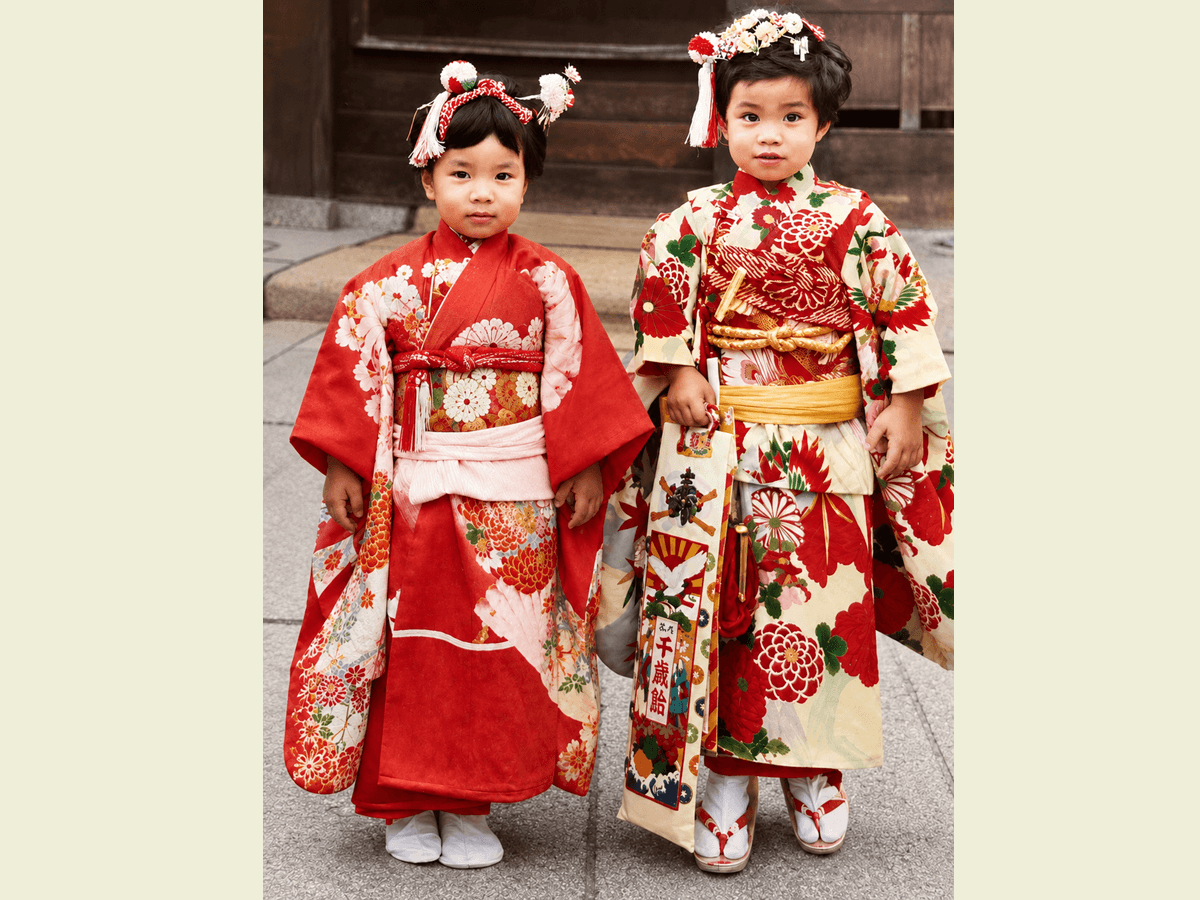
1. What‘s 七五三(Shichi-Go-San)?
This is one of Japan‘s traditions that has stood the test of time and is celebrated for three-year-old girls, five-year-old boys and seven-year-old girls’ healthy growth. According to tradition, Shichi-Go-San falls on November 15.
People go to shrines and are thankful for the kids’ healthy growth and pray for their bright future. Besides that, a whole industry has grown around Shichi-Go-San, which has included dress-up kimono, hair and make-up, commemorative photos and creating albums. Some families also choose wearing a dress or a tuxedo instead of Japanese traditional clothing.
In this time and age, the opportunities to wear a kimono have decreased. Having said that, why do people cherish this celebration? In my eyes, they have a desire to preserve those precious moments together. That’s why the tradition still matters today.
2. Why Ages 7 (Shichi) 5 (Go) 3 (San)?

These ages marked important milestones in a child’s growth.
At the age of 3, girls traditionally began to grow their hair.
At the age of 5, boys traditionally wore a hakama for the first time, which was a samurai’s formal wear.
At the age of 7, girls traditionally wore their first obi, which was the same as an adult, instead of simple cords.
That’s why people came to celebrate at these ages.
3. Why November 15?
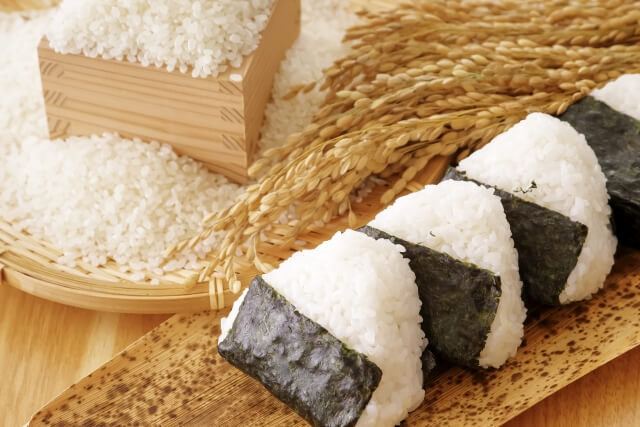
Historically speaking, according to the lunar calendar once used in Japan, it is said that November 15 was considered an auspicious day, and the day when daimons were never out and about. So people started to celebrate Shichi-Go-San on that day.
There is another theory that is related to the harvest season. Back then, fall was the season for giving thanks for a bountiful harvest. Also, it was believed that children’s healthy growth was considered a blessing from the gods.That’s why, people have come to thank both the harvest and kids’ growth, and pray for their future at this time.
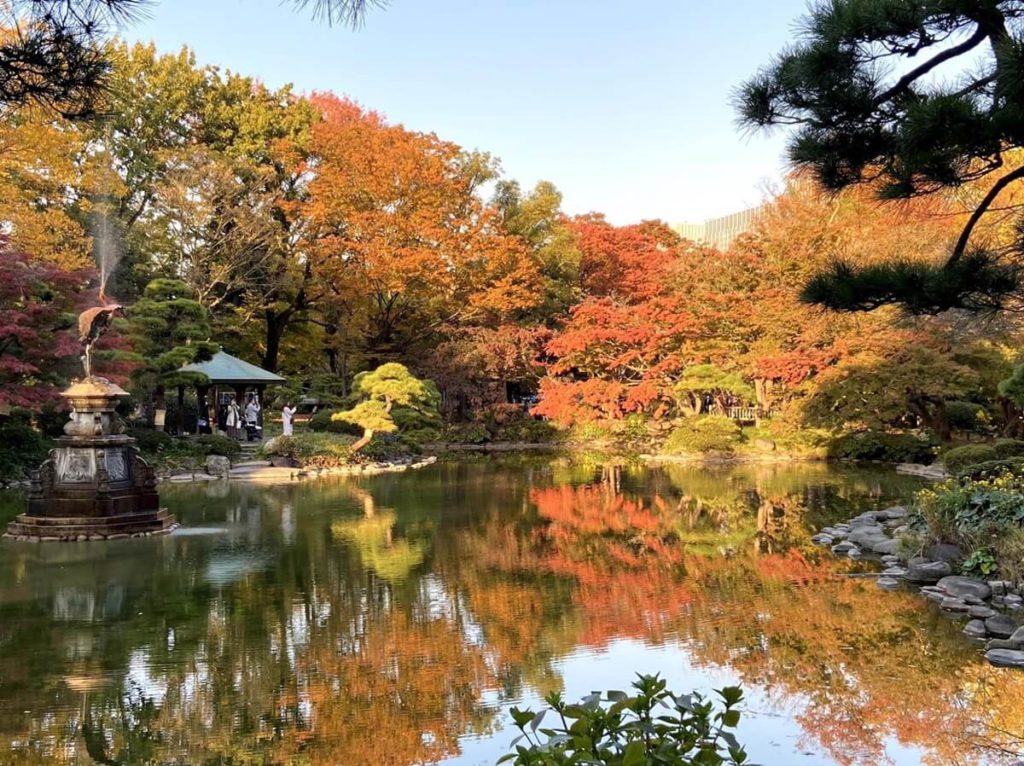
I’m going off on a tangent, but November in Japan is nice and cool, less rain and comfortable overall. For the tourists who choose this season, it’s a better time to visit Japan. You can see stunning changing leaves all over Japan. If you come along with your children, why not experience wearing kimonos altogether. It might be a commemorative photo like a local family, and you can feel and touch a part of Japanese culture.
4. What’s the meaning of the decorations on kimonos?
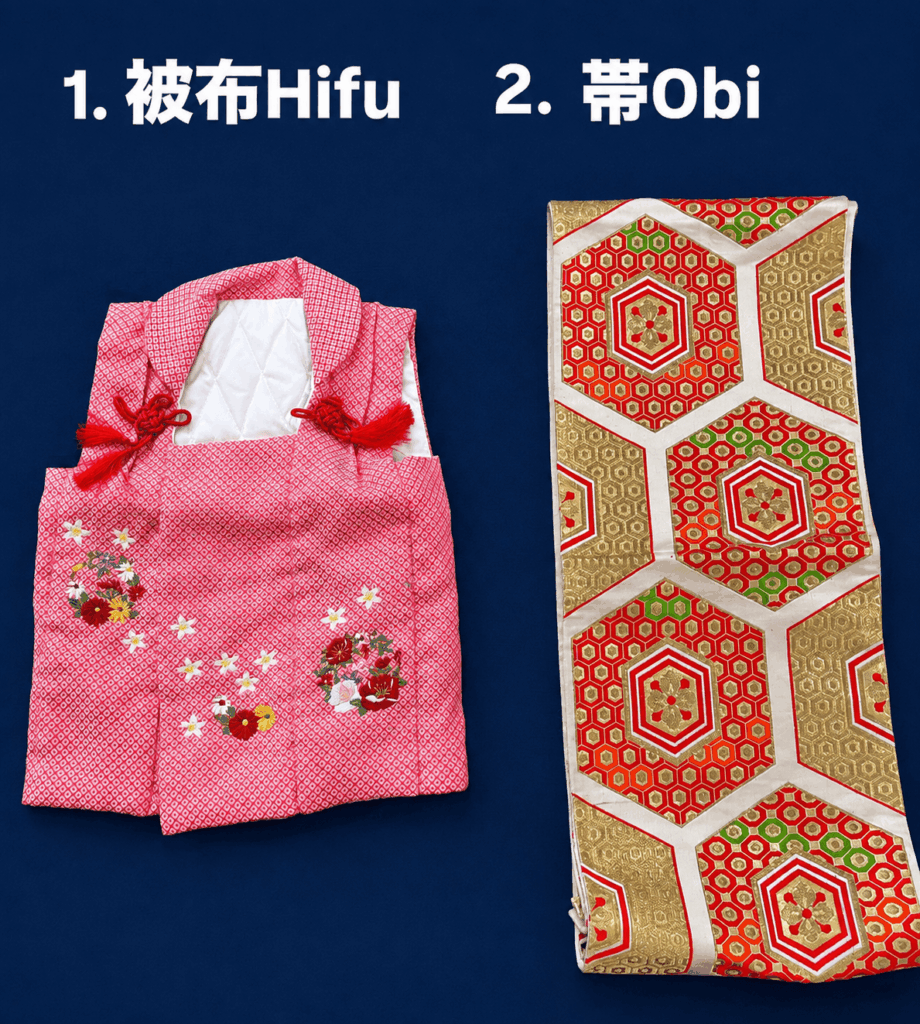
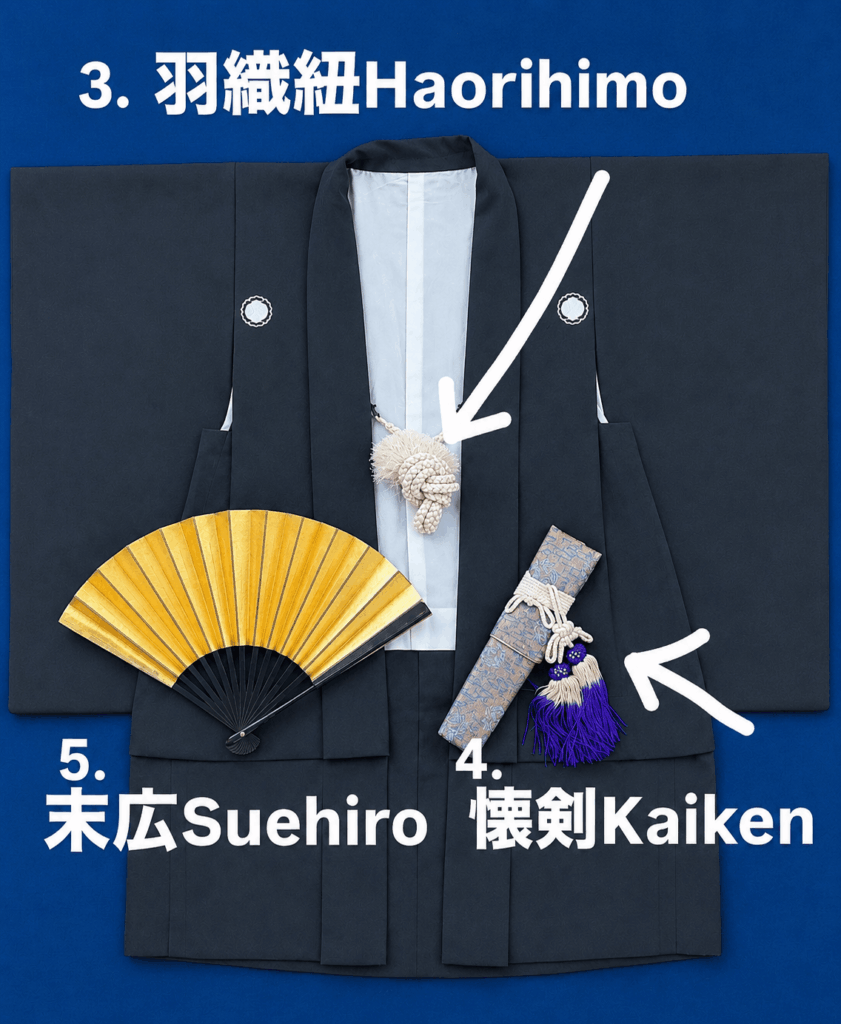
As a kimono dresser, I’m intrigued by the meaning of decorations. I’ll pick outsome.
- 被布 (Hifu) →It’s a kind of vest worn over a kimono. “It symbolizes protection.”
- 懐剣 (Kaiken)→ It’s a miniature sword. “It represents bravery, protecting themselves and civility.
- 羽織紐 (Haori Himo)→It’s a strap that is a part of an outfit.”It represents creating a connection.
- 帯 (Obi)→ It’s a wide fabric belt for a kimono. “It marks the first step toward adulthood.”
- 末広 (Suehiro)→It’s a fan. “As the shape tells us, it represents a bright future.”
The common hopes of each decoration are “Good health and well-being,” “Longevity,” “Happy life,” and “Bright future.”
People put their wishes into these costumes and decorations—Thankful for healthy growth so far and best wishes for their future.
Conclusion
As a person who works in childcare, I feel happy to support their daily life, seeing their growth.—The day when they walked for the first time, they put their thoughts into words, and they started playing with friends. These moments are big and important milestones to them. Shichi-Go-San is also an essential Japanese traditional custom to celebrate the milestones of children’s growth.
The laughter of children makes people around you smile and happy. And, I’d say the warm heart and thoughts that people wish for children’s bright future and healthy growth is common all over the world even though countries and cultures are different.
Are there any traditional cultural events to celebrate for children in your countries? Please tell me about it in the comments.

I live in Tokyo and am working at a pre-school. I’m a nature lover and enjoy experiencing the characteristics of each season. In addition, I like taking care of plants. My strength is improving myself and being able to think in a positive way.

 HTJ has a YouTube page! Check it out